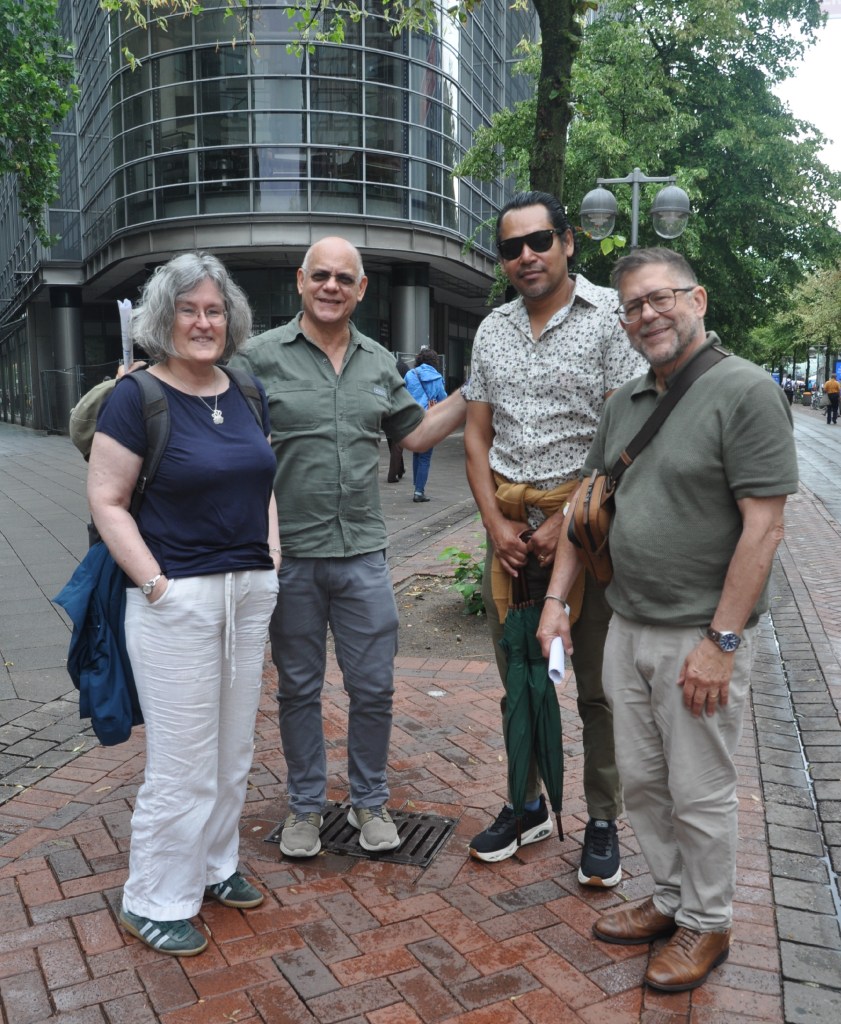
Hanover, Monday, June 29, 2026. We had arranged to meet Edel Sheridan-Quantz from the ZeitZentrum Zivilcourage in front of the train station at 9 o’clock. For days, the weather had been sunny and extremely hot. But just when we wanted to start on a walking tour to the places where Dina and Julius Blumenfeld had lived and worked, it was raining cats and dogs! Jim, Steven, José, Edel and I agreed that it would be best to wait out the downpour in a café. By the time we had finished the coffee, tea and sweets that Steven offered us, the sun was shining again.
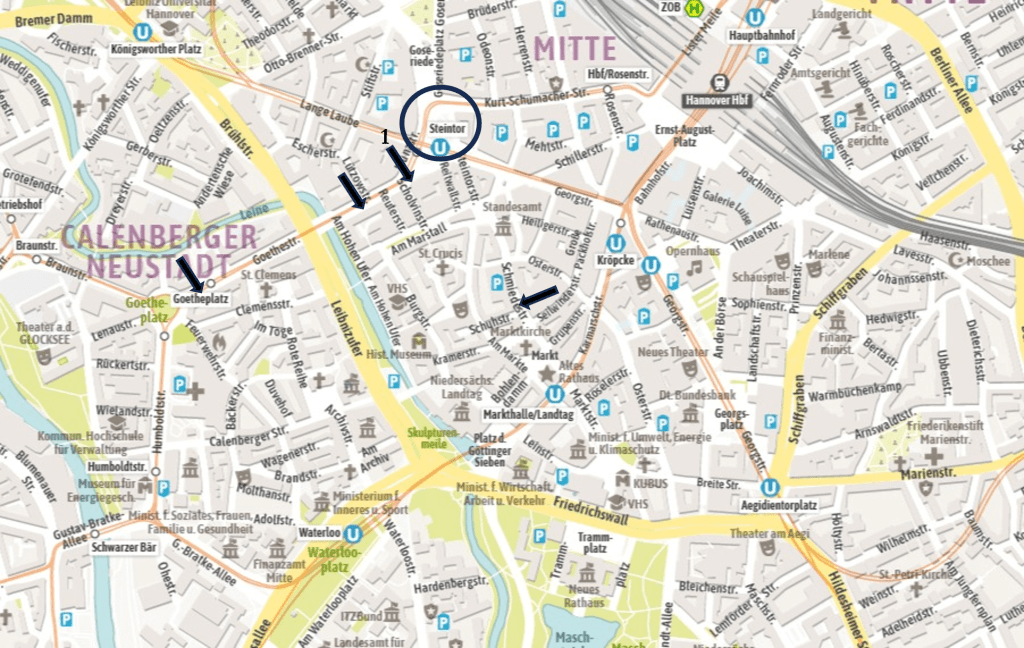
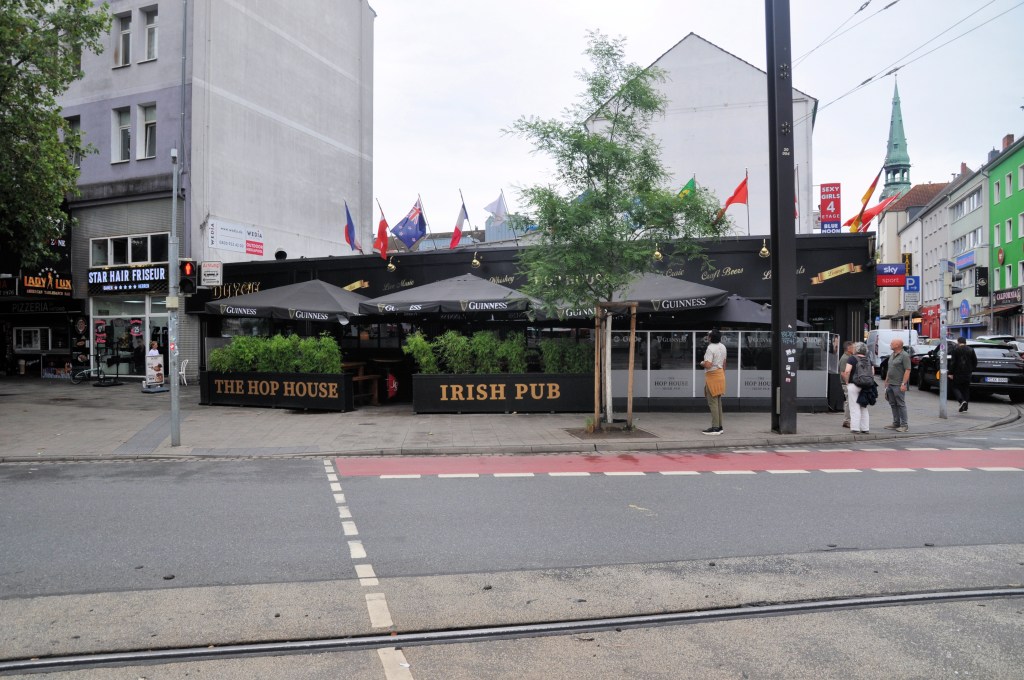
1. Scholvinstrasse 6 was the first shared address for Dina and Julius Blumenfeld in Hannover. The entrance to the butcher shop on the ground floor and to their apartment above was not on Scholvinstrasse, but on Goethestrasse. The building they moved into in 1912 no longer stands. Today, a single-story structure housing an Irish Pub occupies the site.
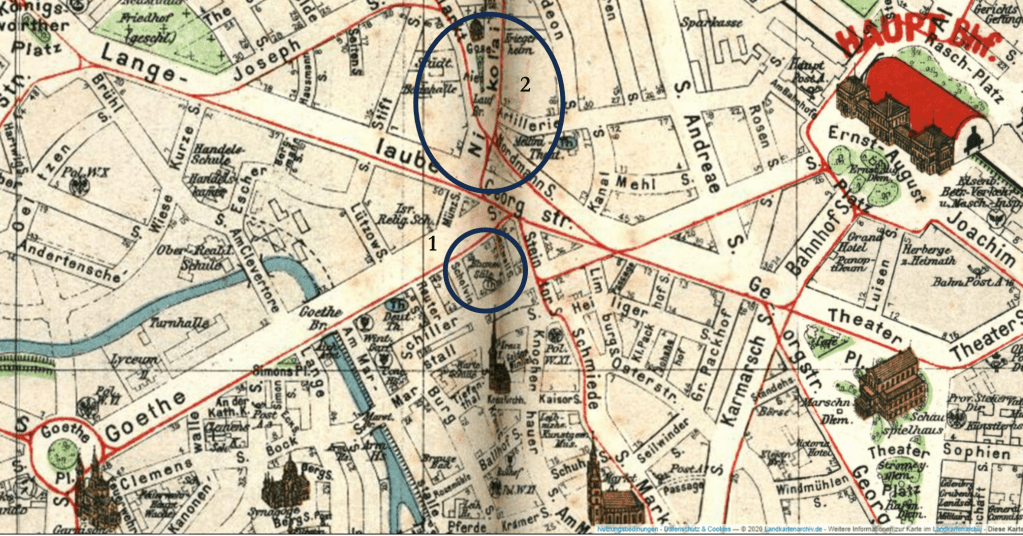
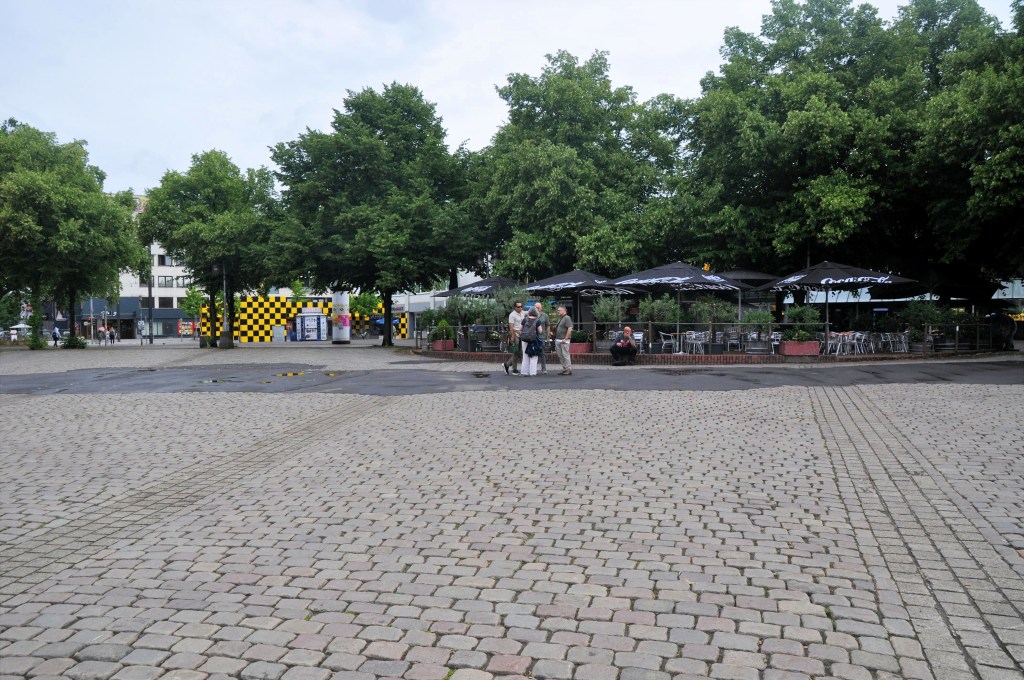
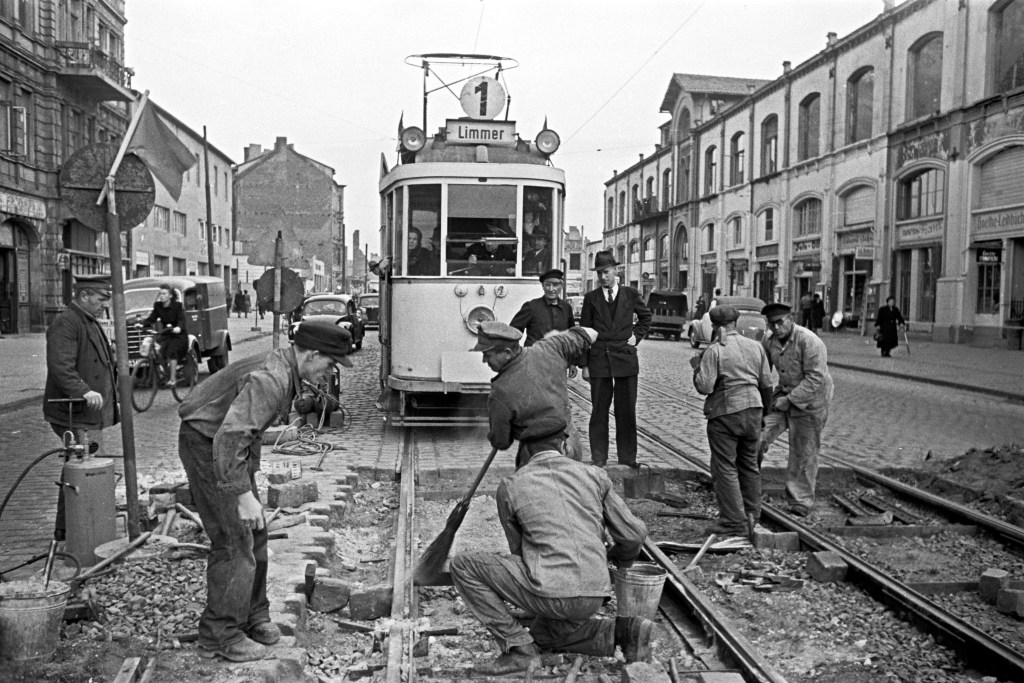
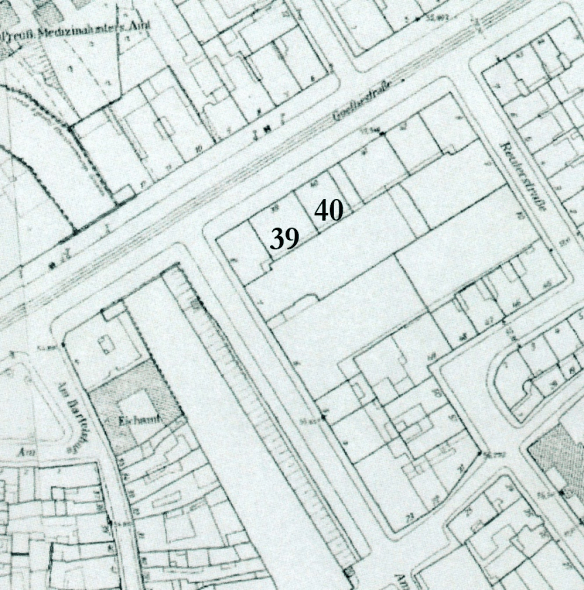
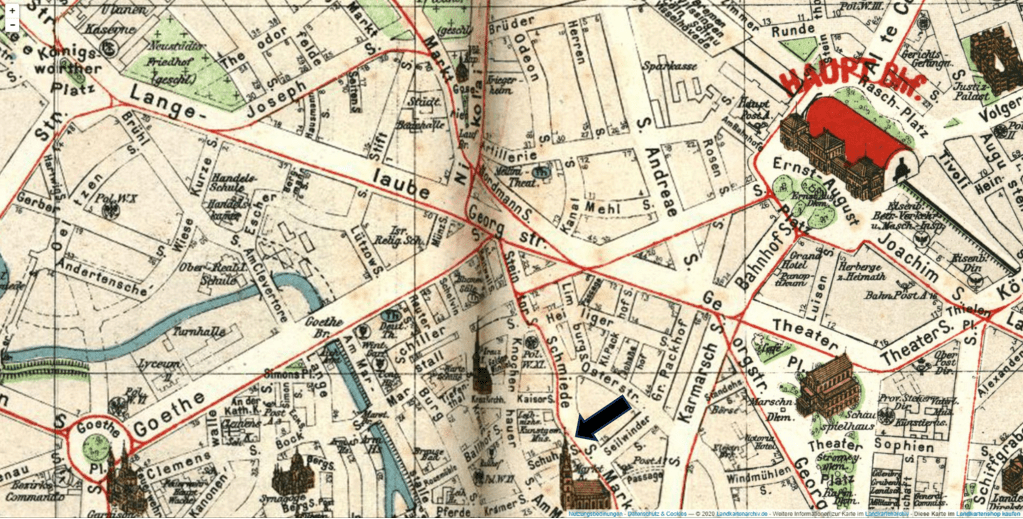
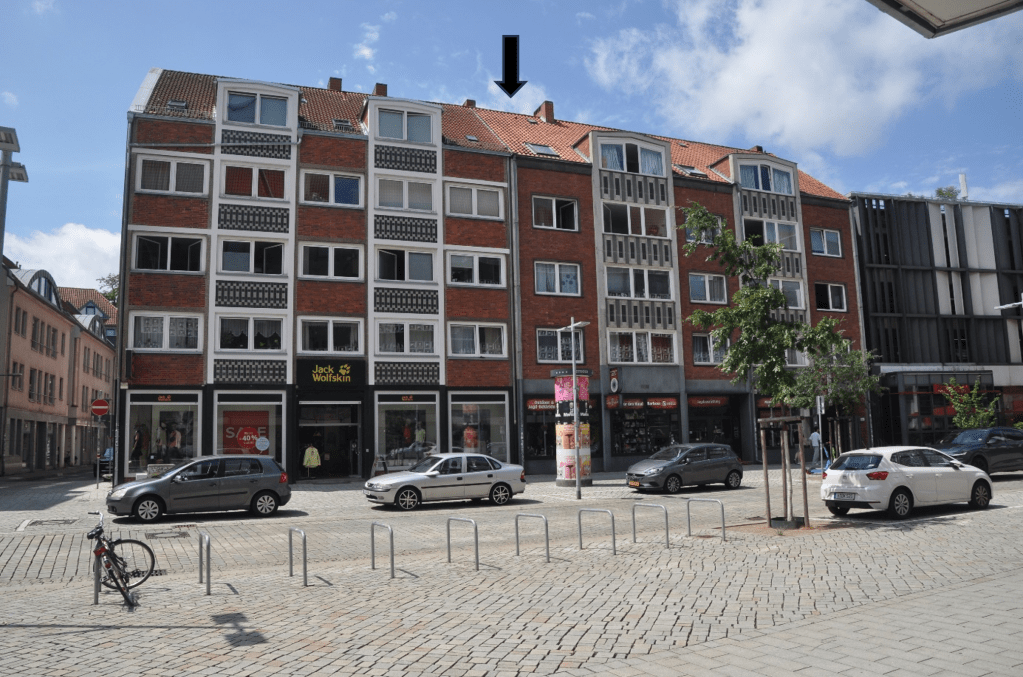
2. Sometime between 1917 and 1920, the Blumenfeld family purchased the building at Nikolaistrasse 2. The buildings here were destroyed during World War II. After the war, the city decided not to rebuild them, but to create an open space. The 1912 map above shows where Nikolaistrasse was located. After the laying of the Stolpersteine for Dina and Julius the next day, our little group sat for several hours in the café visible in the photo below.
3. In 1930, Julius and Dina sold the building on Nikolaistrasse to Fritz Sender and moved the store to Goethestrasse 39 (today Goethestrasse 19). In 1931 they rented an apartment above the shops next door at Goethestrasse 40 (today also number 19). The financial crisis during that time may have made it necessary for the Blumenfelds to sell the property.
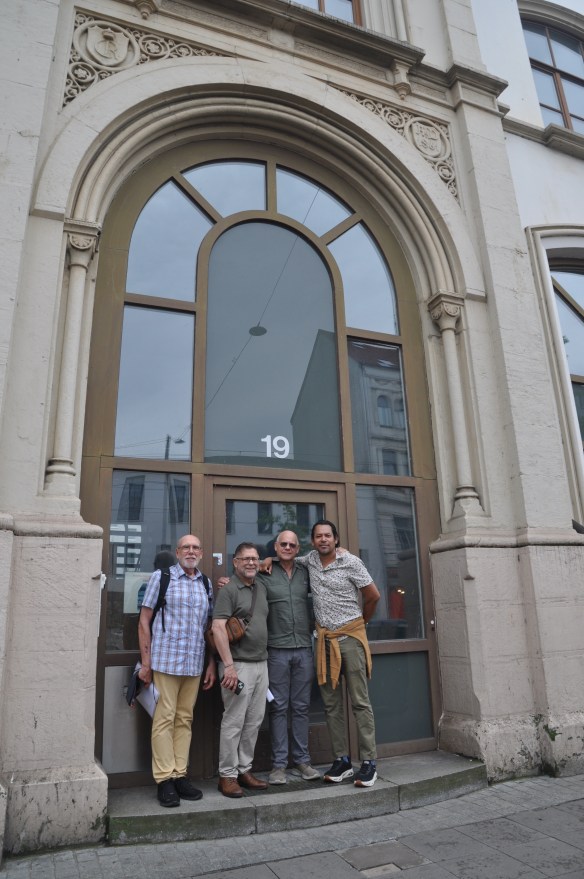
The building was built between 1856 and 1861 as the Royal Carriage Hall. In 1878, it was renovated to house stores, offices, and apartments. Following the air raids on Hanover, only seven arches of the original 15 and the central arch remain from the former Royal Carriage Hall.
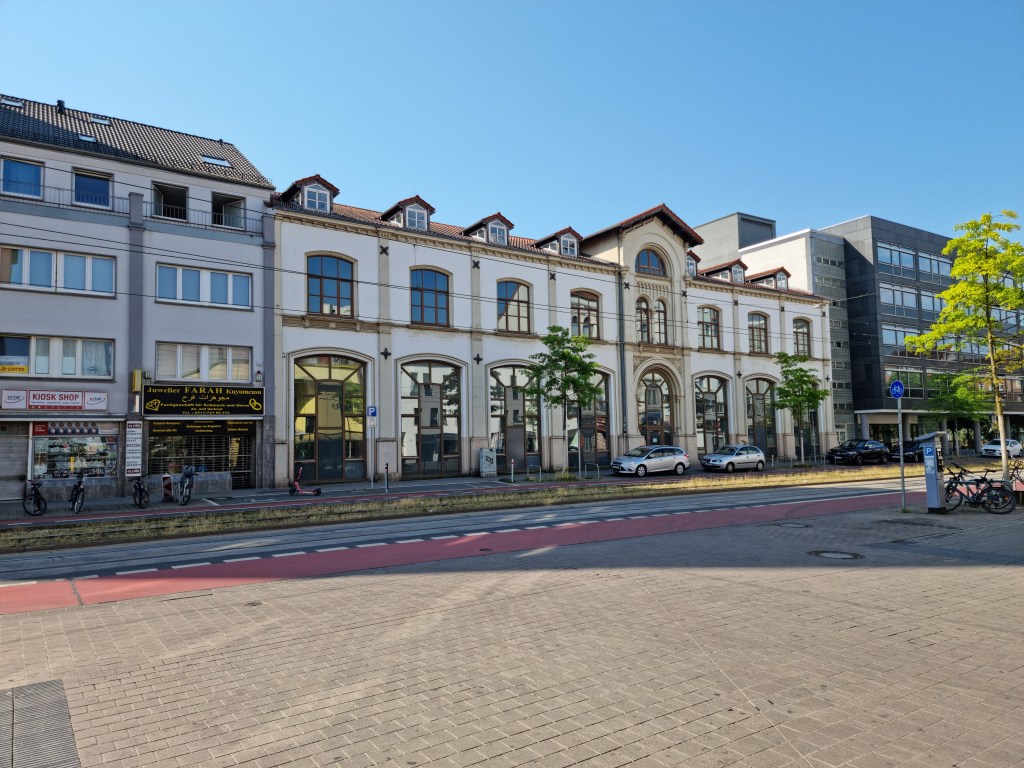
5. Before leaving Goethestrasse to head to the last place where the Blumenfelds lived in Hannover, we turned right in front of number 19, walked toward Goetheplatz, and stopped in front of number 47.
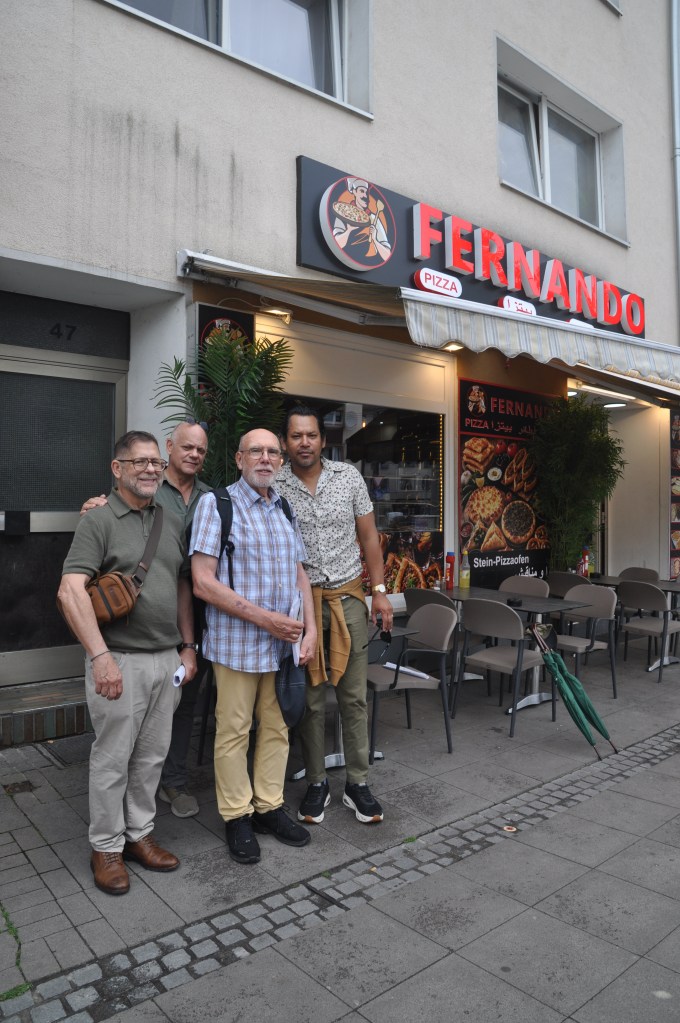
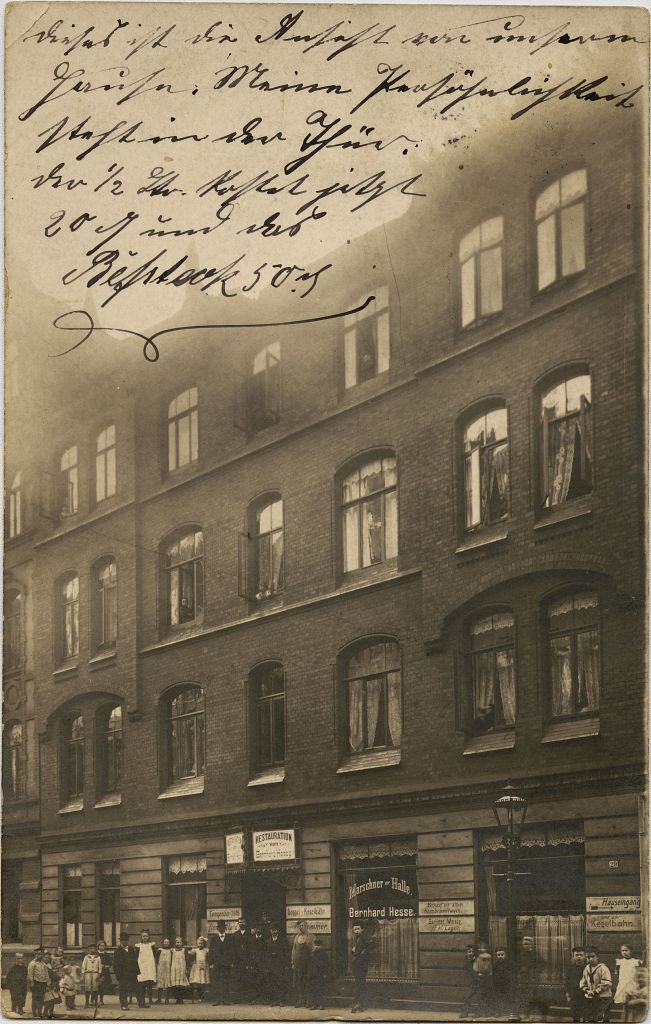
Julius’ sister, Settchen, and her husband, Adolf (Aron) Londner, operated a watchmaker’s shop and jewelry store at Goethestrasse 29 (today 47). The postcard image of the building was taken around 1909, when Bernhard Hesse ran a restaurant there.
Two days before we all visited the places where the Blumenfelds had lived in Hannover, I sought them out alone. In front of today’s Goethestrasse 47, a young man asked me what I was looking for. When I told him I was visiting places where my Jewish relatives had lived, he stood, shook my hand, and invited me to sit down and have a drink with him and his cousin. Rashid is a Kurd who had fled from Syria to Germany. He described the persecution he had experienced as a member of a minority and his long, dangerous journey to safety. The persecution of minorities was the thread that bound us for our brief conversation in front of a place my Jewish relatives had been forced to flee many years earlier. Members of minorities need to stick together!
4. “The ‘Aryanisation’ of Jewish-owned businesses forced Julius to hand over his shop to the butcher Hermann Kesten in 1937. The family also had to give up their apartment and moved first to Georgstrasse 51 (which no longer exists; today it is part of Am Steintor Square) and then to Schmiedestrasse 17 (now 11). According to the city directory, there were 28 households in the five-story building (including two attic floors).” (Dina née Heiser & Julius Blumenfeld, Short Biography, Dr. Edel Sheridan-Quantz)
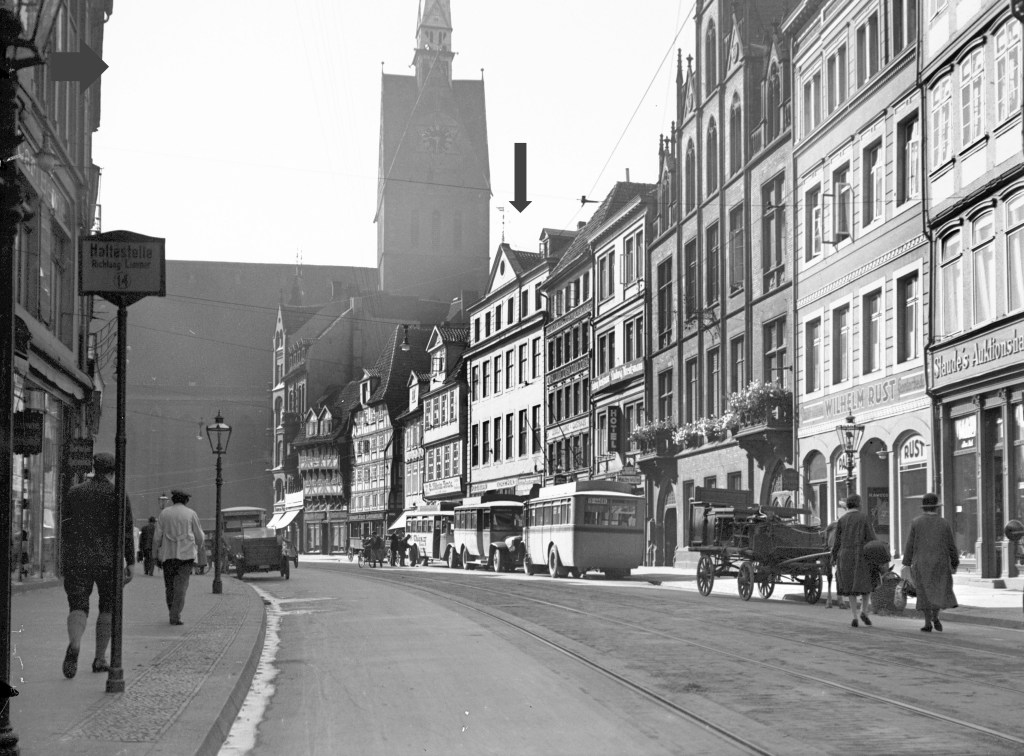
On our walking tour of Hannover with Edel Sheridan-Quantz, we also visited the site where the New and Old Synagogues had stood. The story of that visit is the subject of the next report on our visit to Hannover.

