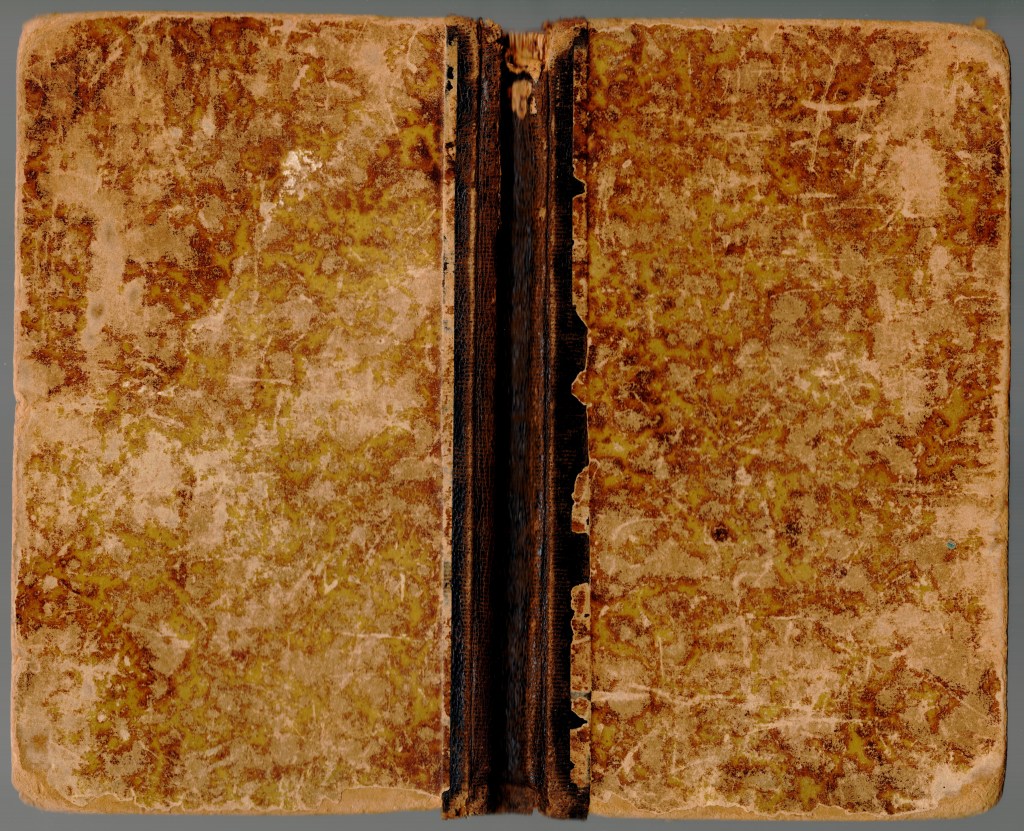
The book my cousin Steven Bloomfield had often told me about was carefully wrapped in a velvet cloth and placed in a plastic bag to protect it from moisture. He took it out of a small over-the-shoulder bag and gave it to me. It was our great-grandfather’s prayer book, his Siddur. Steven entrusted it to me, saying I would best know what to do with it. None of us interested in the Blumenfeld family history have children of our own who would be interested in preserving this family heirloom. At the moment, I had no idea to whom I should pass it on.
At the moment, what the future would hold for this little book, measuring about 11,5 x 19 cm, was the furthest thing from my mind. I felt honored to be entrusted with my great-grandfather’s Siddur. I felt close to the man I had never met: Jakob Blumenfeld aus Momberg, as he had written inside the cover of his prayer book. I felt responsible and challenged to do something meaningful with this gift.
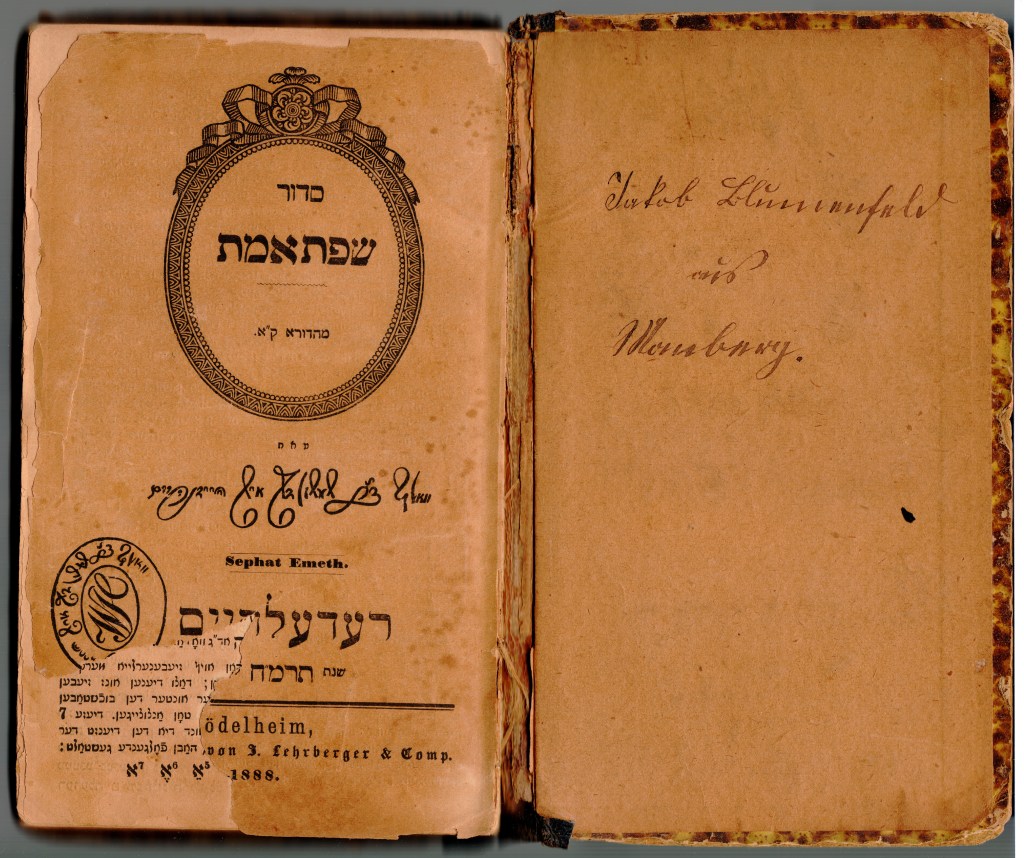

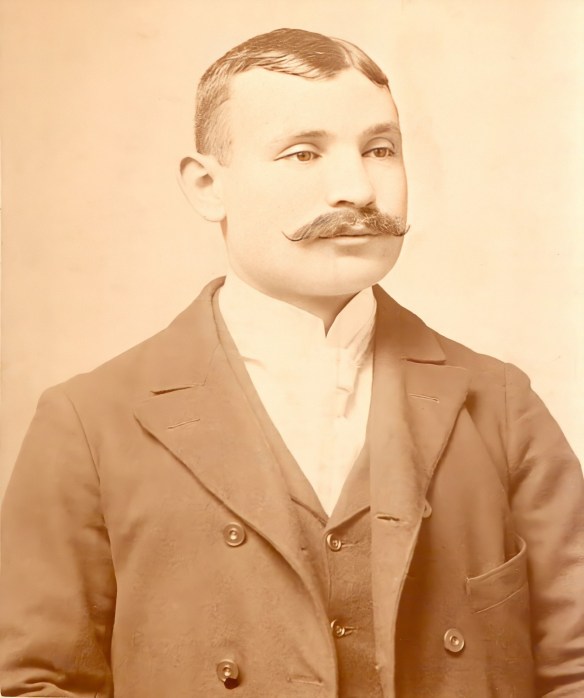
This Siddur Sephat Emeth was printed in 1888. That was the year that Jakob Blumenfeld had left his home village of Momberg, Hesse, in Germany at age 16! Had his parents given him the prayer book as a going-away present? Was it meant to remind him of his Jewish heritage and religious faith in the New World? Did they intend it to be a sign of the tie that binds family members when they are absent from one another? I assume that his parents, Isaac Blumenfeld and Biene, née Rothschild, knew they would most likely never see Jakob again! The photo of Jakob from ca. 1888 was in his pocket watch.
Great-grandfather Jakob used his Siddur like a family Bible. After the birth of his and Regina, née Wolff’s first child, our grandfather Irving, he began recording his, his wife’s and his children’s birthdates inside the back cover of the book.
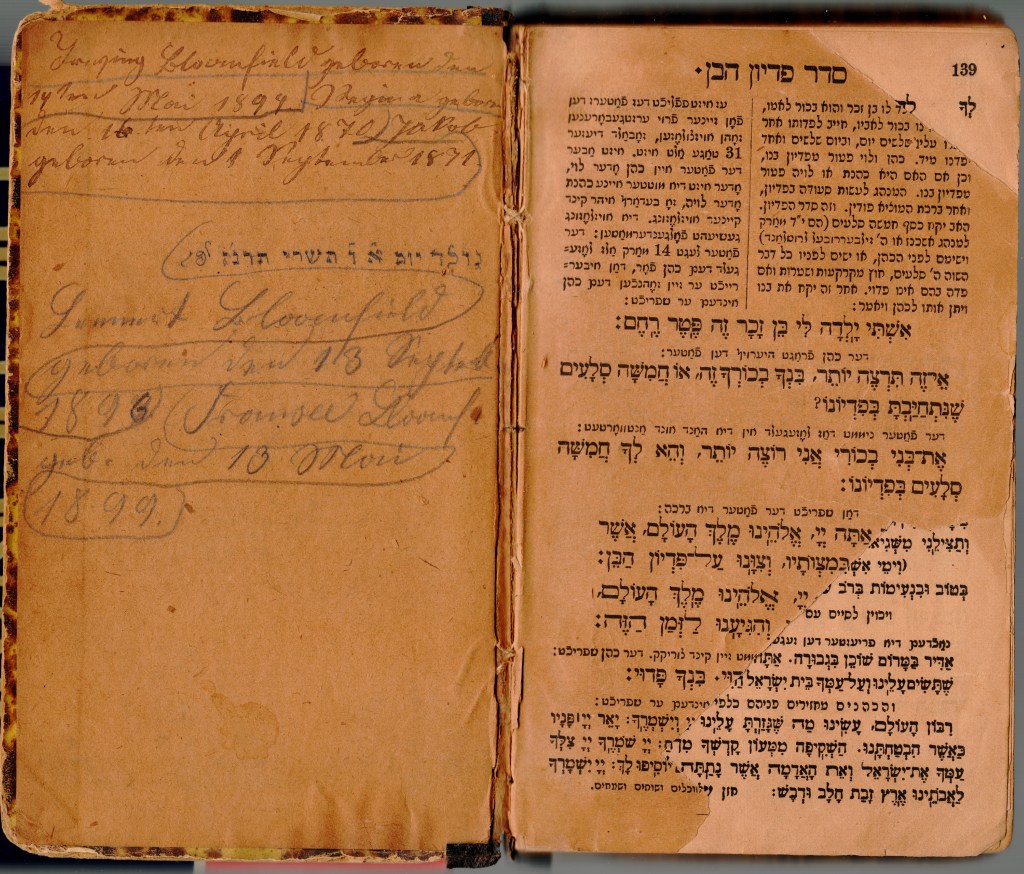
The prayer book is worn, the binding coming apart. Is that the result of age? Had the children, Irving, Leonard, and Frances, played with the book as the lines drawn around the names inside the back cover seem to indicate? Had Jakob taken the book to synagogue, used it for his daily prayers? Who knows? Jakob and Regina’s granddaughter told my Cousin Steven Bloomfield that her grandparents weren’t particularly religious. I guess that’s not important now.
The missing corner of the title page piqued my interest in the book’s origin. I wanted to know something about the publisher, whose name is only partially visible. Google provided me with the following information:
The Siddur Sephat Emeth was and remains the most influential prayer book in Germany. It reflects a genuinely German minhag [rite or tradition]. This Siddur is widely used not only in German-speaking countries but also in countries where followers of religious movements originating in Germany reside. There, it is known either as Sfas Emes or as the Rödelheim Siddur, since the siddur was first printed there in 1799 [by Wolf Heidenheim]. (Siddur Sefat Emet, in: talmud.de)
J. Lehrberger & Comp. was a prominent Jewish printing and publishing house in Rödelheim (now a district of Frankfurt am Main). It grew out of the renowned printing house of the scholar Wolf ben Samson Heidenheim and played a decisive role in shaping Hebrew and Jewish-German book printing in the 19th century. (Jüdisches Museum Frankfurt/Main)
I will return great-grandfather Jakob Blumenfeld’s Siddur to his home village of Momberg to be kept in their archives together with his biography and the digital images of him, his wife, and his children that I have collected with the help of cousins Steven and Jim. It is our family’s contribution to the preservation of the Jewish history of Momberg and Neustadt. I hope that someday the Siddur and what we know about Jakob will be displayed in an exhibition.