Until the construction of their own synagogue in 1858, the Jewish community of Momberg used the synagogue and ritual bath (mikveh) in Neustadt, where a cemetery for both Neustadt and Momberg was also established in 1828–30. A mikveh had been in use in Michael Spier’s house in Momberg since 1825.1
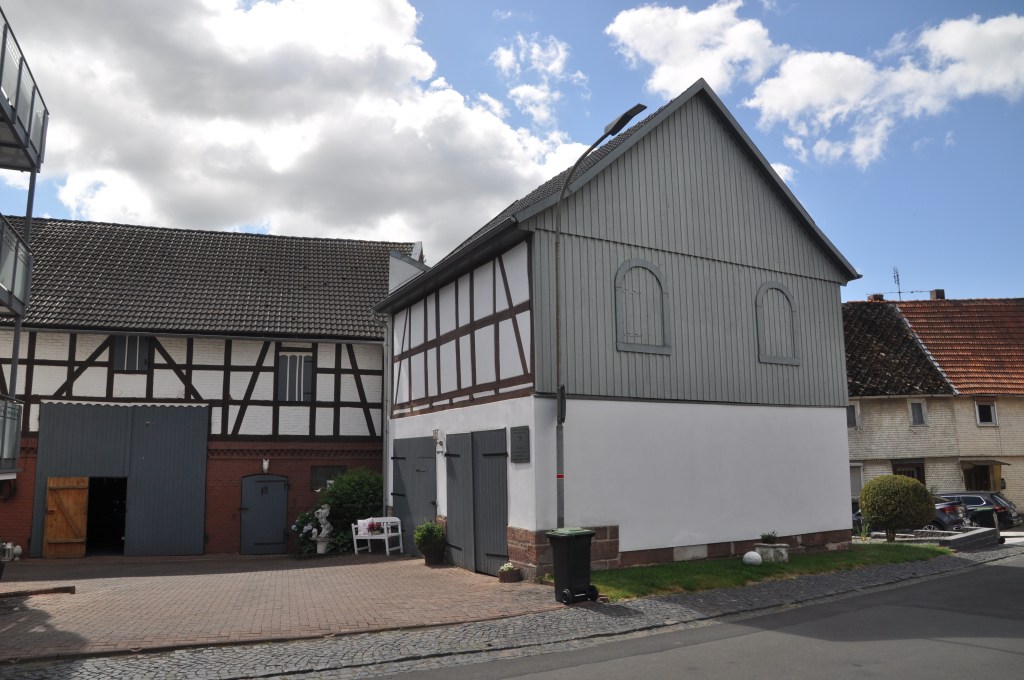
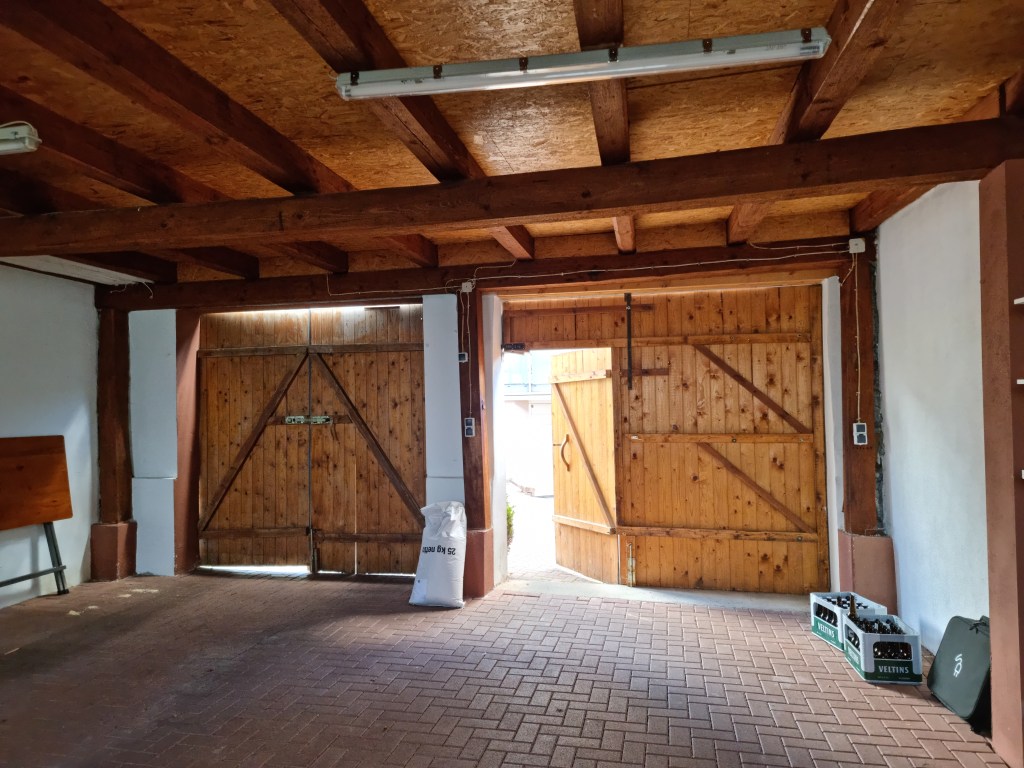
“A new synagogue was built in Momberg after the synagogue in Neustadt became too small around 1850. Initially, an expansion of the synagogue in Neustadt was planned in 1857 based on designs by the Kirchhain civil engineer; however, only repairs were ultimately carried out after the Jewish families living in Momberg decided to build their own synagogue and no longer wished to travel to Neustadt for services. On April 19, 1858, the president of the Momberg Jewish community, [Abraham] Blumenfeld, was able to inform the regional board in Marburg that the synagogue was ready for use.”2
“According to local tradition, a former barn from the town of Ebsdorfergrund was dismantled, brought to Momberg, and converted into a synagogue. The Ark was located in the area of what later became the barn door (after 1945).”3
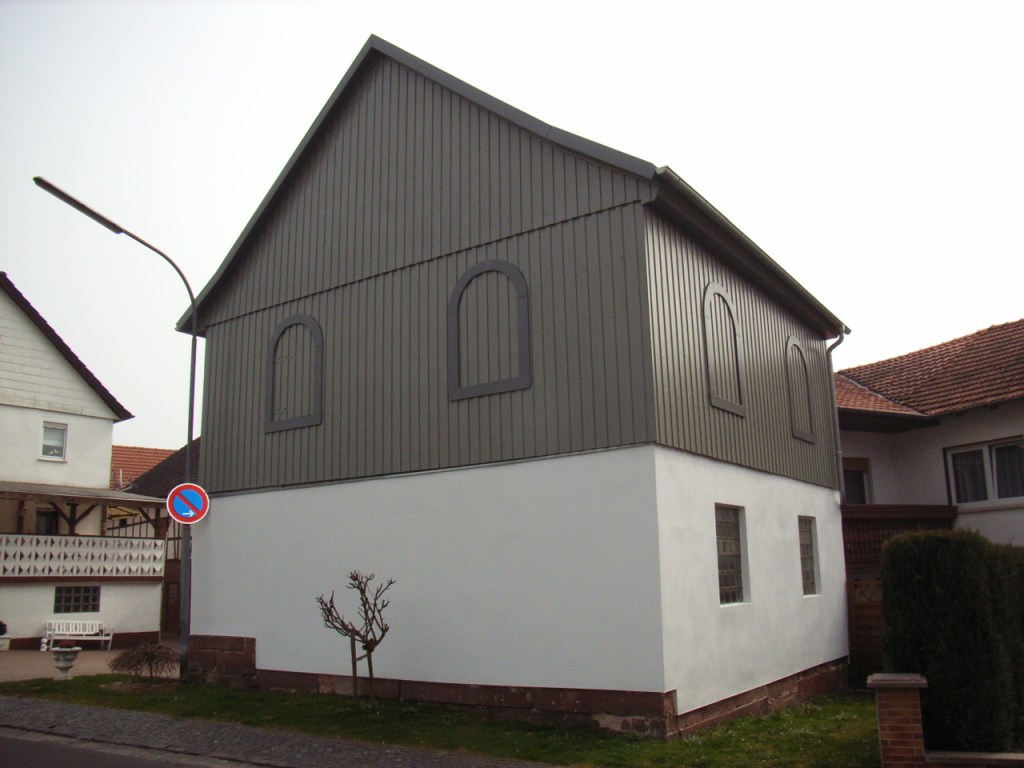
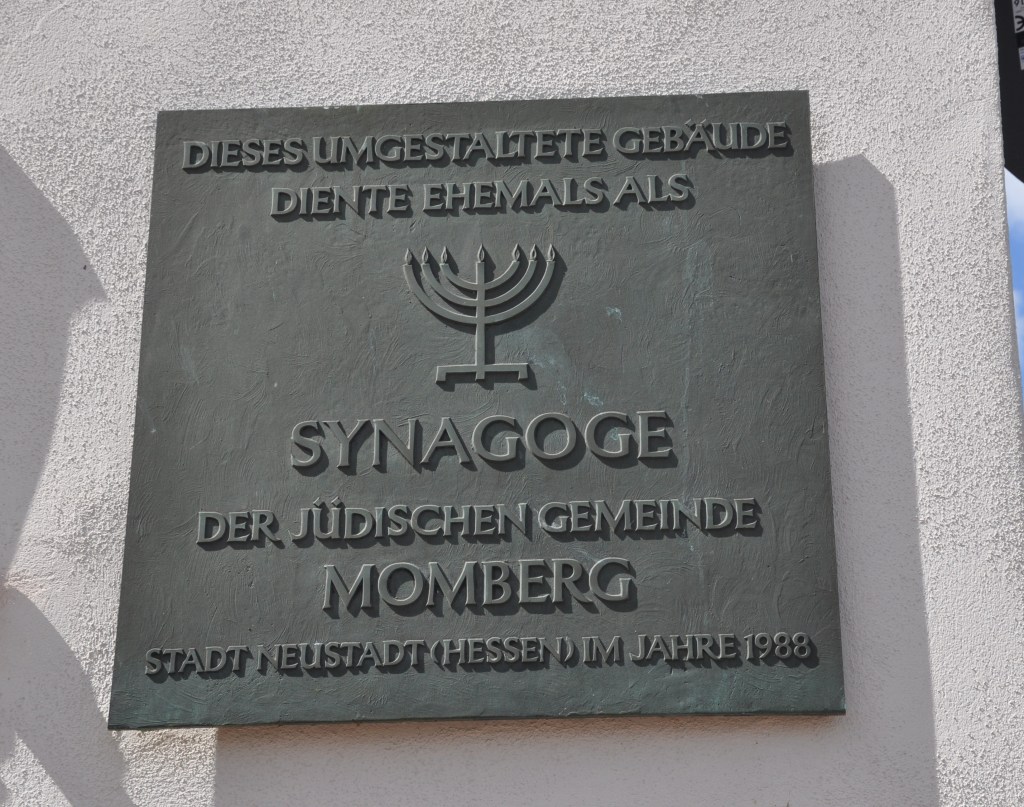
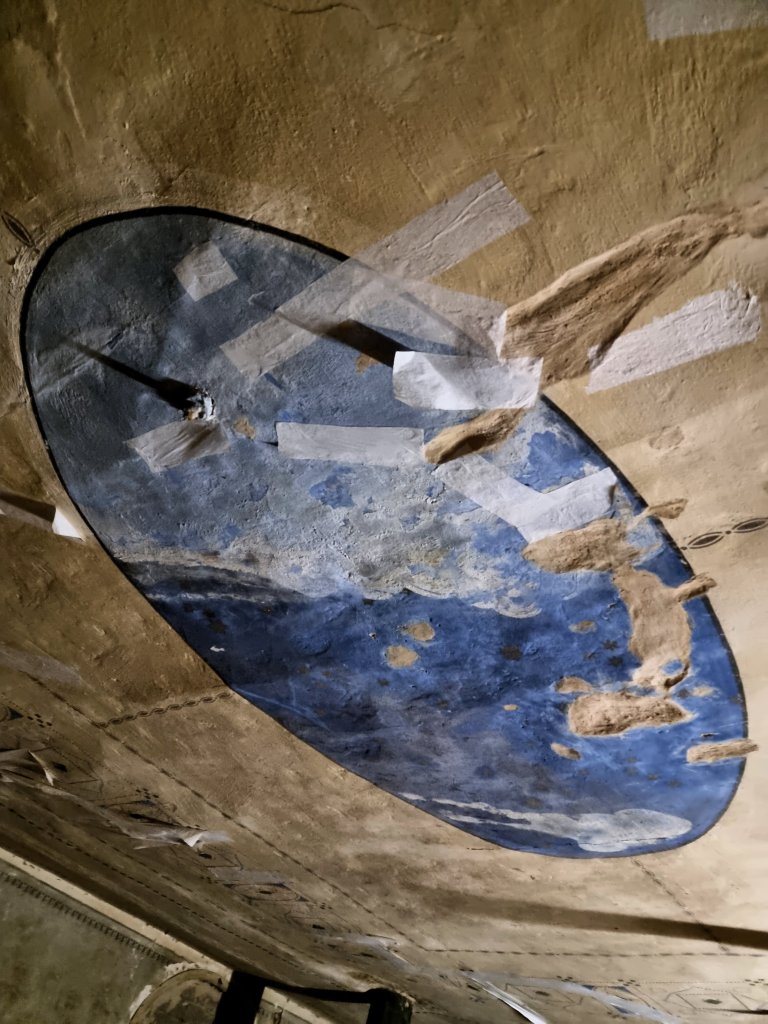
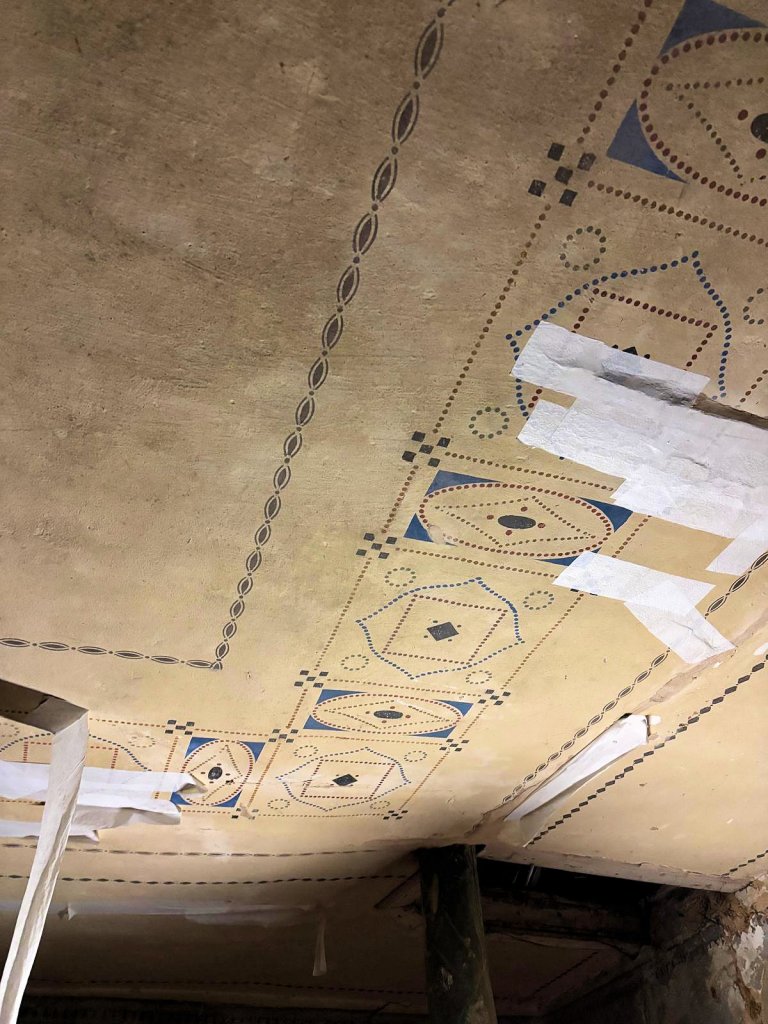
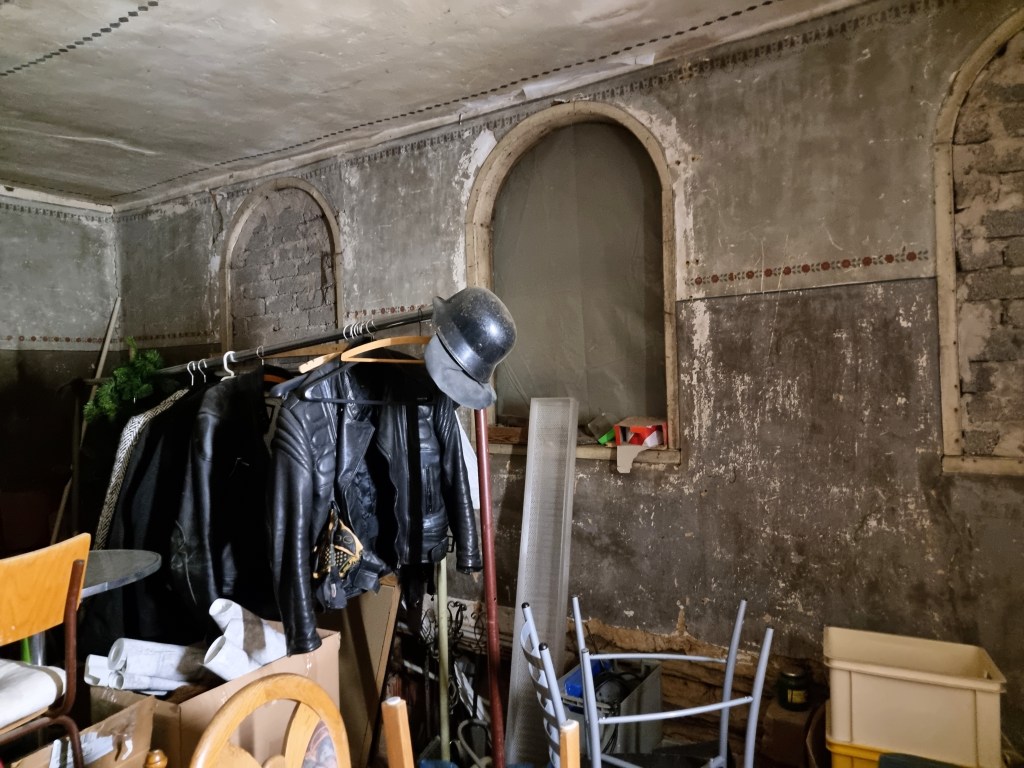
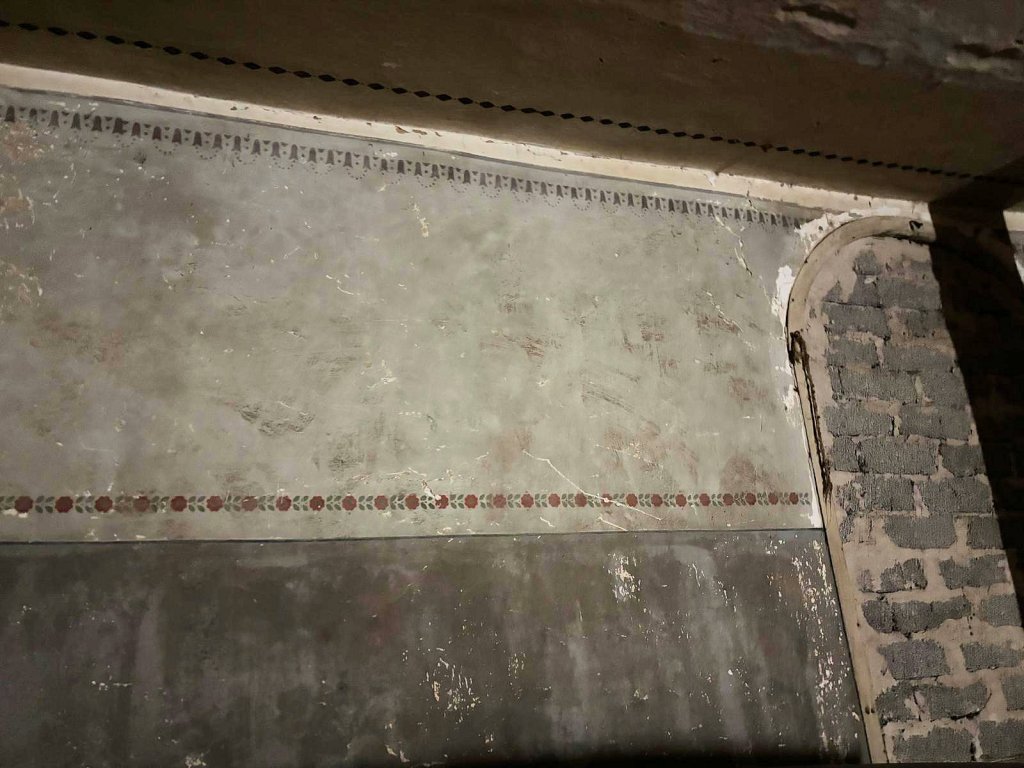
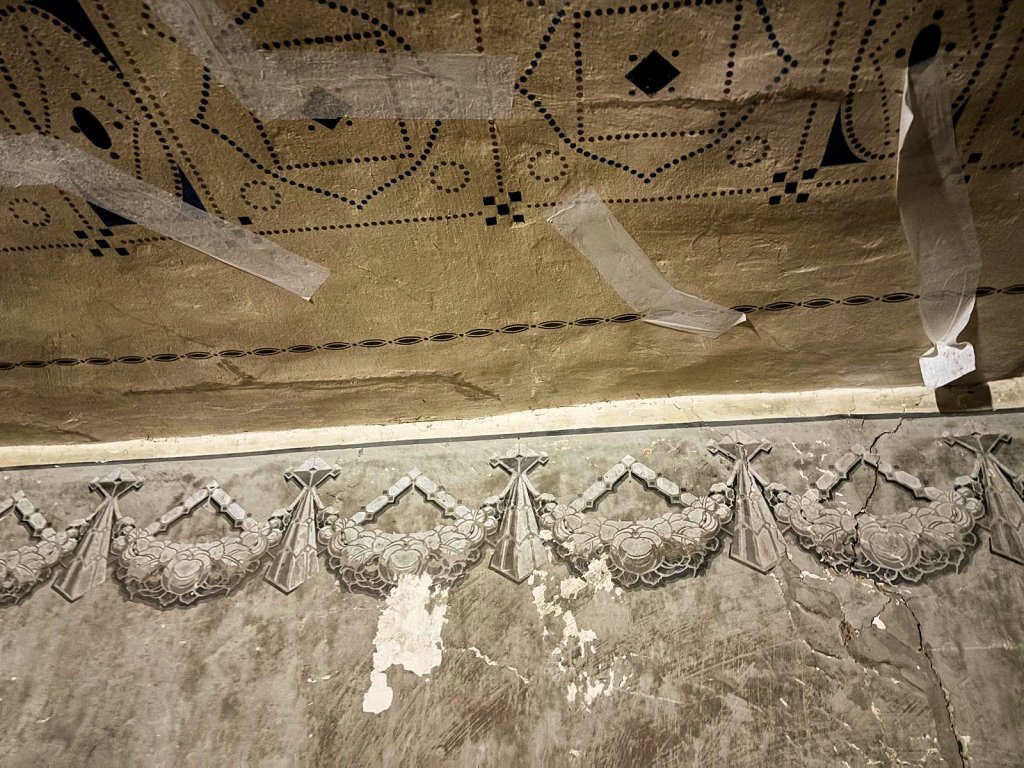
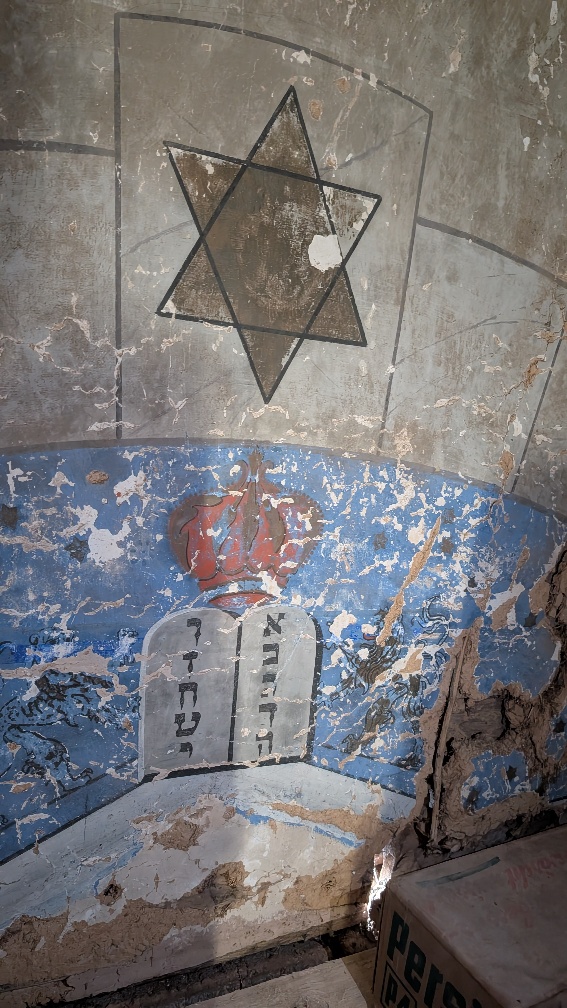
“The small building on what is now Burggasse [10] measured 7.5 by 7.0 meters and was two stories high; a fence surrounded the synagogue grounds. On the eaves sides of the building, there were two round-arched windows on both the upper and lower floors, which are visible from the inside today and are indicated on the façade by mock-ups. The interior of the synagogue consisted of a single-sided gallery, a bimah chair, and 10 pews. The ceiling painting was created by a master painter from Treysa. It depicted a celestial vault with a blue background and golden stars. In the middle of the arch was the Star of David, with the tablet bearing the Ten Commandments placed below it. The ceiling was divided by two rectangular medallions, each framed by smaller, geometrically ornamented areas. The upper sections of the side walls along the base of the ceiling were also decorated with a garland.4 “The synagogue was presumably extensively renovated at the beginning of the 20th century, as indicated by some inconsistencies in the still-preserved interior furnishings and changes in the painting.”5
The “Night of Broken Glass” on November 9, 1938, arrived in Momberg a day early. Gisela Spier-Cohen, then a 10-year-old girl, recounts the events of November 8 and 9 in her hometown in an interview with Pelin Aytac for the SPD Neustadt website.6 The following is a summary of the interview.
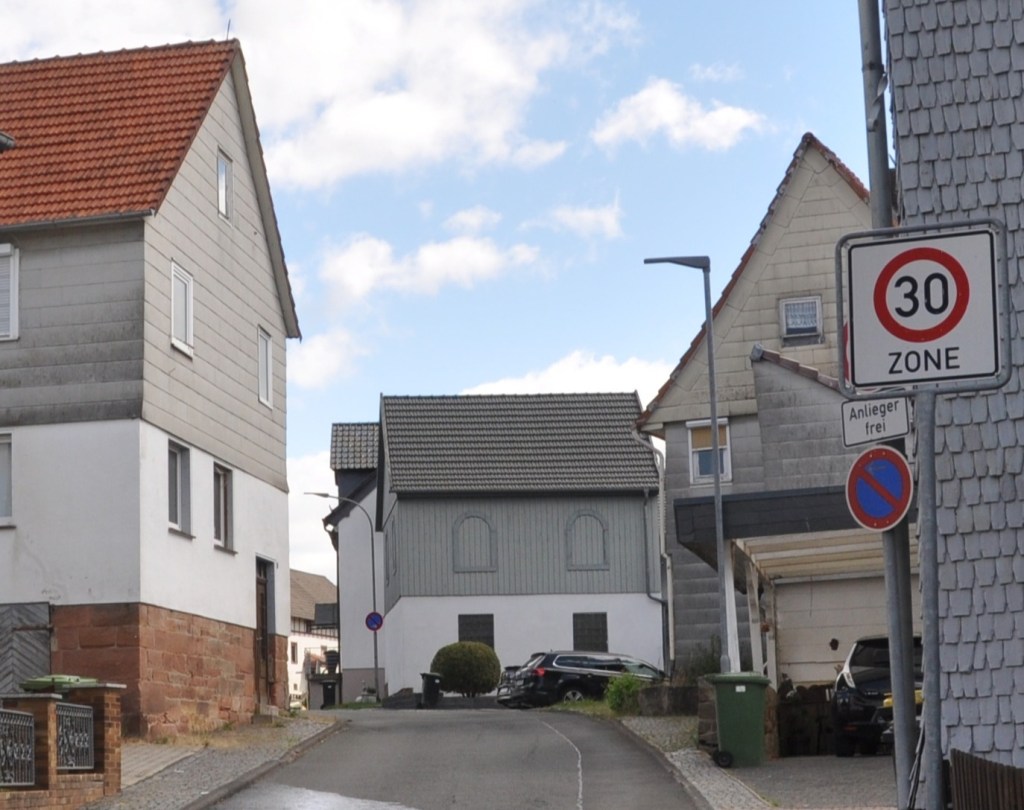
It was a beautiful autumn day. Gisela Spier was playing ball with a friend in the yard when she saw a stranger enter her parents’ house. She was curious and followed the stranger. The child had noticed that something was wrong.
“It was already evening, and my mother had set the table for dinner,” recalls Gisela Spier-Cohen. The stranger sat at the table next to her father, Siegfried Spier. “You’re all stupid people in this village. You have no idea what’s going on in the cities. Jews are being beaten up, their windows are being smashed with stones,” the man reported. He had come to warn them.
The stranger’s words frightened the family. Gisela’s mother, Sitta Blumenfeld Spier, sent her husband to the synagogue to retrieve the small Torah scroll that her father, Gerson Blumenfeld, had donated. “Papa listened to her, got up, went to the small synagogue, and brought the Torah back,” Gisela writes in her “Memories of Childhood and the Concentration Camps.”7
Gisela spent the night with Tante Hannchen, who was afraid to be alone in the house given the circumstances. “The next morning, on my way to school, I went to see my parents,” Spier-Cohen continues. Her mother was sitting on the stairs of the house in her nightgown. Her hair was uncombed. She was crying. Her appearance greatly alarmed young Gisela.
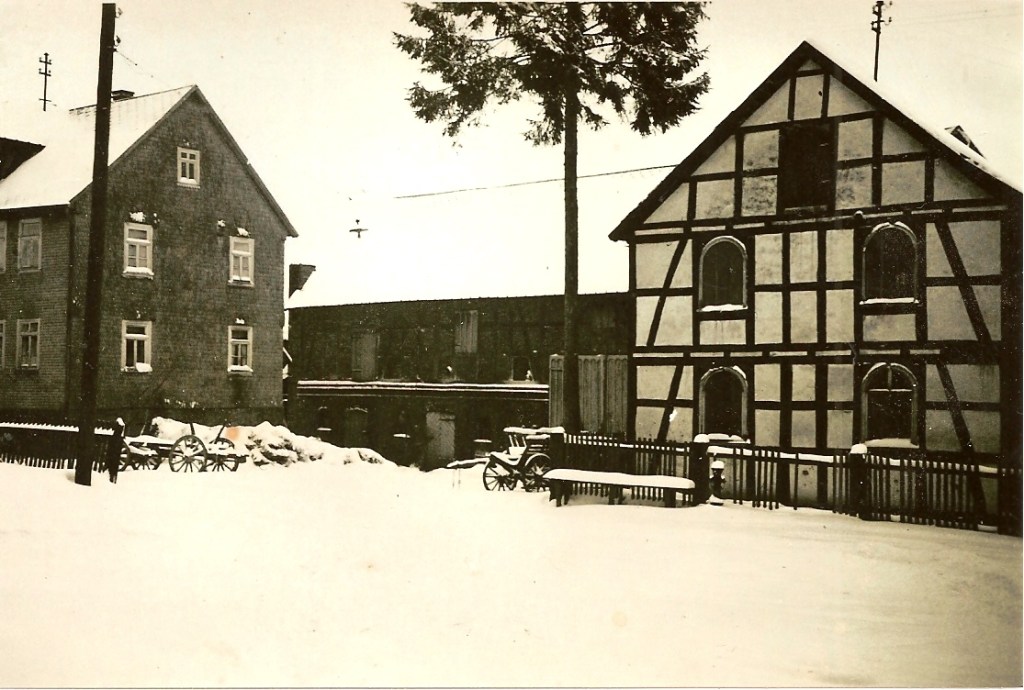
Together they went to the synagogue. “Everything was in ruins. There was something burning in front of the synagogue,” Gisela recalls. The SA mob had set fire to the prayer books, the curtain of the Ark, and other furnishings. “We tried to pull the items out of the ashes,” said Gisela Spier-Cohen. And “the pain in my heart was greater than the pain in my hands.”
Siegfried and Sitta Blumenfeld’s grandson, Simeon Spier, describes the same situation. In his email to me,8 he writes: “[T]his is my understanding of the events: […] A man came to warn my grandparents, Siegfried and Sitta (Blumenfeld) Spier, who lived across from the Blumenfeld house and synagogue in the center of Momberg. The man was either a Christian man who was a WWI army buddy of my grandfather or a Jewish man who had seen what had taken place in the cities and came to warn them. My grandmother Sitta then told her Blumenfeld family (Fritz [Blumenfeld] and Kathinka [Blumenfeld Rosenberg, Emil Rosenberg’s wife]) to secure the Torah. Fritz then took it to Kathinka’s house as it was Christian-owned. […] The Jewish houses were raided, but the Rosenbergs’ house was not since the SA did not know Jews resided there.”
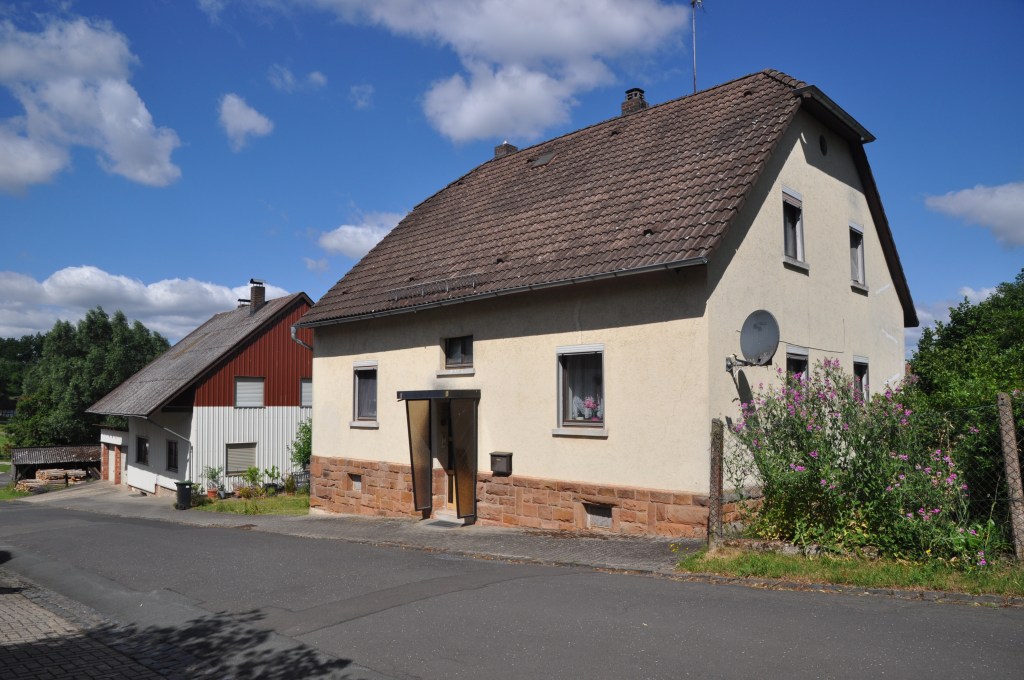
Emil Rosenberg, his wife Kathinka, née Blumenfeld, and their children did not live with the other Jewish families in Momberg. They lived in a house owned by a Christian that was located outside the area where all the other Jews lived. At that time, a small river served as a sort of demarcation line, and the Rosenberg-Blumenfeld family lived on the “other” side of that line—that is, on the other side of the river.
The farmers had prevented the SA from setting the synagogue on fire. They were afraid the fire would spread to their nearby barns. The farmers likely knew that the fire department would not be allowed to extinguish fires set by the SA.
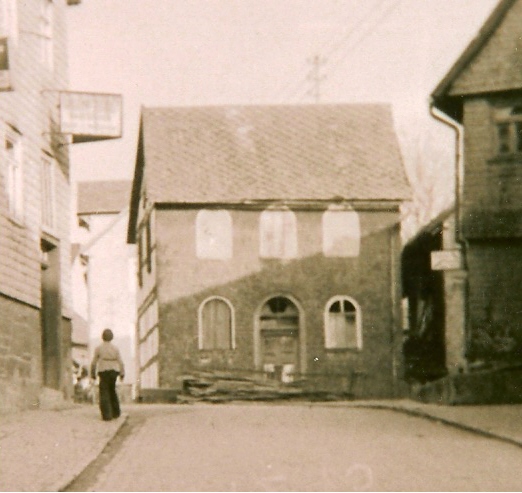
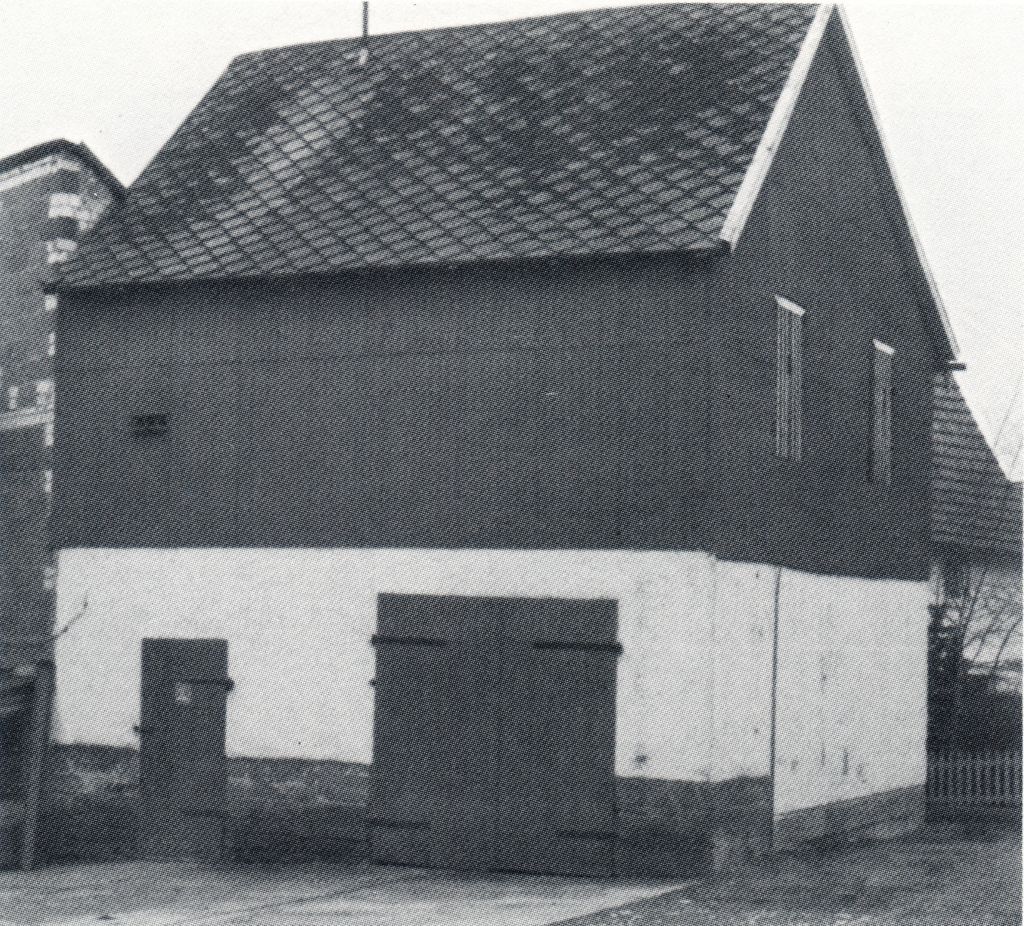
Below the picture of the synagogue below, Willy Schmitt writes in his book “Momberg, eine Chronik” about the “Kristallnacht”: “But the Torah, the holiest Jewish ritual object, was taken home by Fritz Rosenberg after every service as a precaution. (He was the only Jewish person who rented from a Christian.) Thus, the Torah was preserved. Rosenberg took it with him when he emigrated to America.”9
In his “Chronicle,” Willy Schmitt confuses the names Rosenberg and Blumenfeld, because there was no Fritz Rosenberg in Momberg in 1938. The only Rosenberg family10 in the village emigrated to New York in 1940. Michael Rosenberg (*1952), Rosenberg’s grandson and my cousin, confirms my assumption regarding Schmitt’s mix-up of names in an email dated July 1, 2021. However, as seen above, Emil Rosenberg did play a role in the saving of the Torah.
Fritz Blumenfeld’s grandson, Alan Blumenfeld, writes the following about the rescue of the Torah scroll, as he has heard the story passed down in his family:11
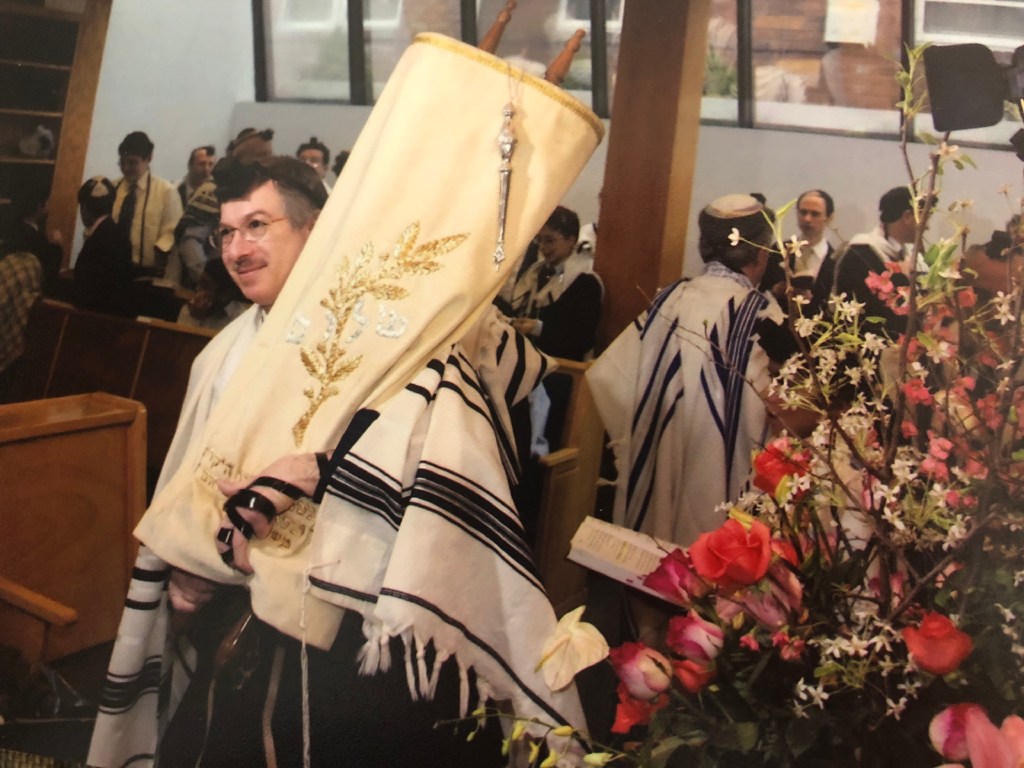
“The Torah was commissioned by my great-grandfather Gerson Blumenfeld to commemorate the loss of his two sons in World War I. It is assumed that the Torah was completed around 1918. Gerson passed away shortly thereafter, and my grandfather Fritz Blumenfeld, the last remaining son, inherited the Torah. During Kristallnacht, the town’s synagogue was set on fire, and my grandfather was able to go inside and rescue the Torah. One of the wooden handles was severely damaged and was replaced in the United States after my grandfather and his family had moved there in early 1939.”
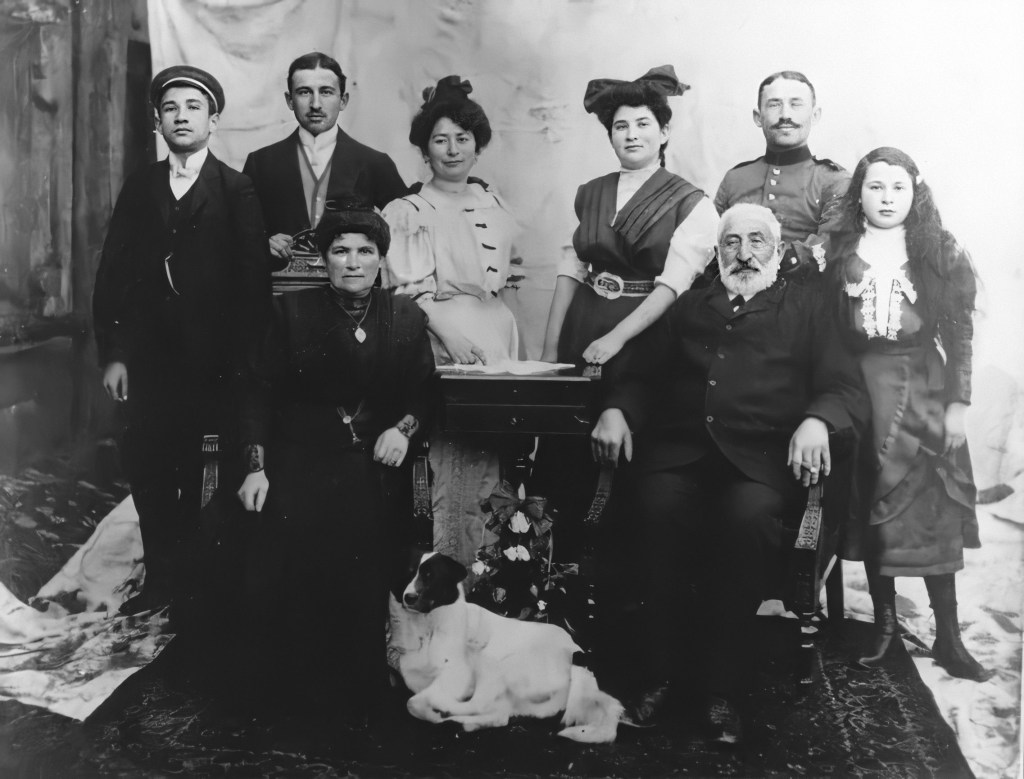
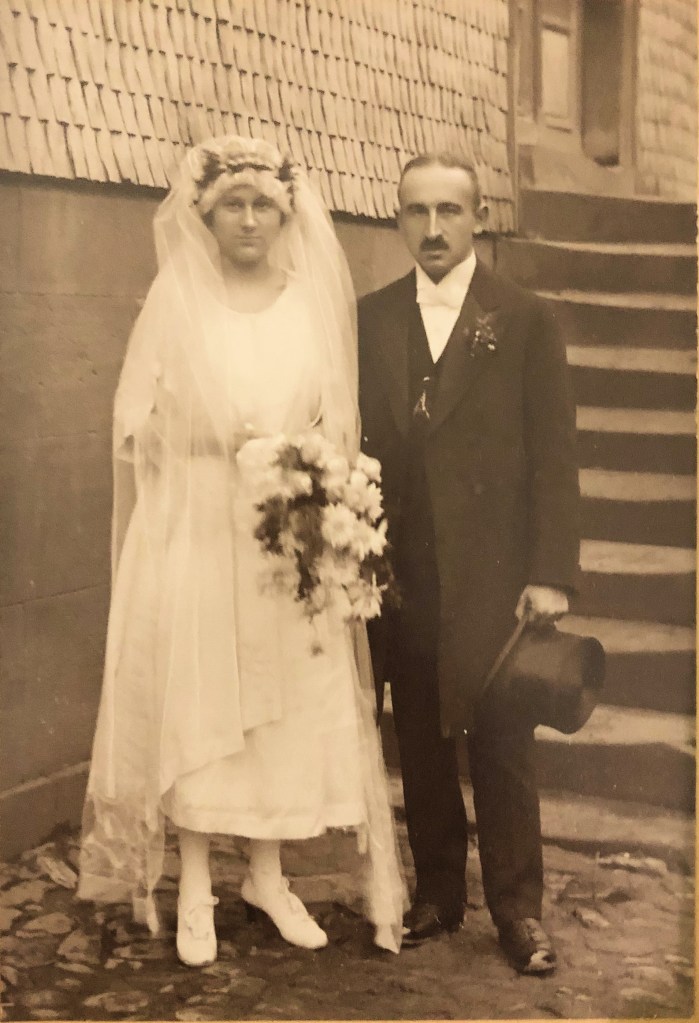
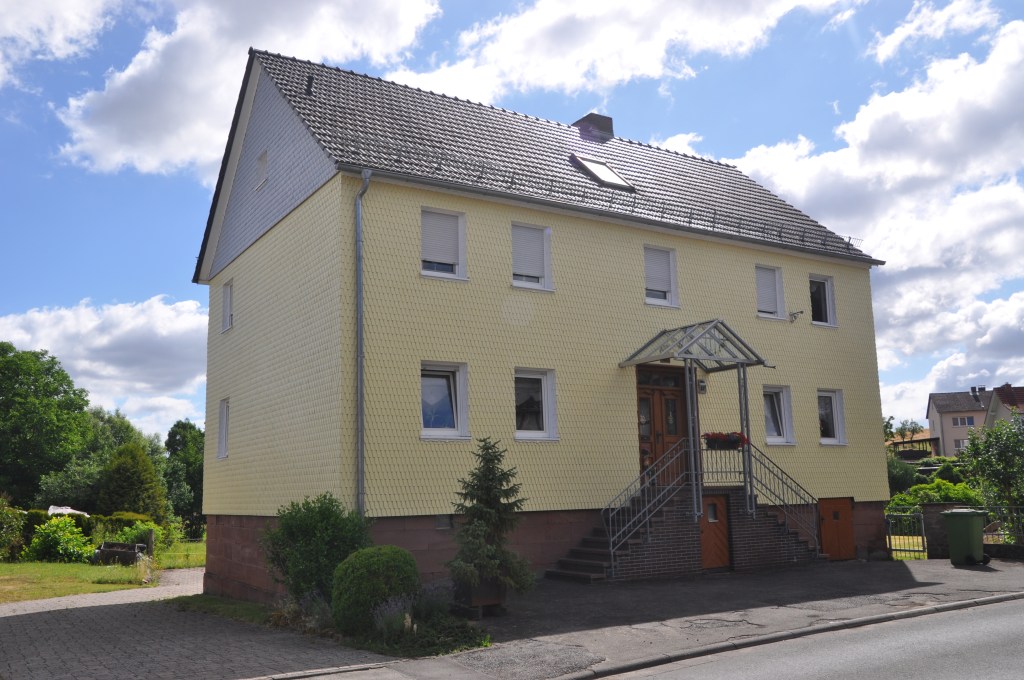
“My father [Gunter Blumenfeld] read from the Torah at his Bar Mitzvah, which took place immediately after the family’s arrival. I read from the Torah at my Bar Mitzvah in 1967, and my son Sanford read from it in 2008.” “Unfortunately, the Torah is now nearly 110 years old and can no longer be used very often.”
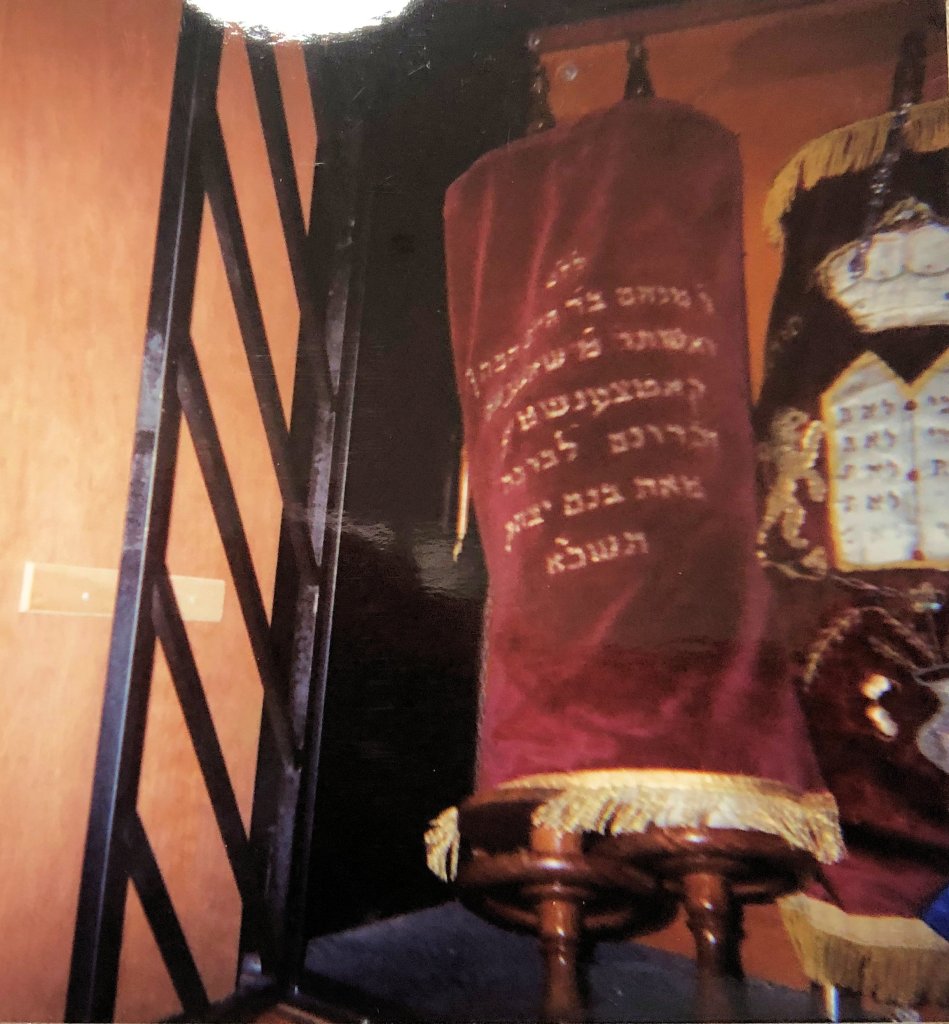
Blumenfeld.
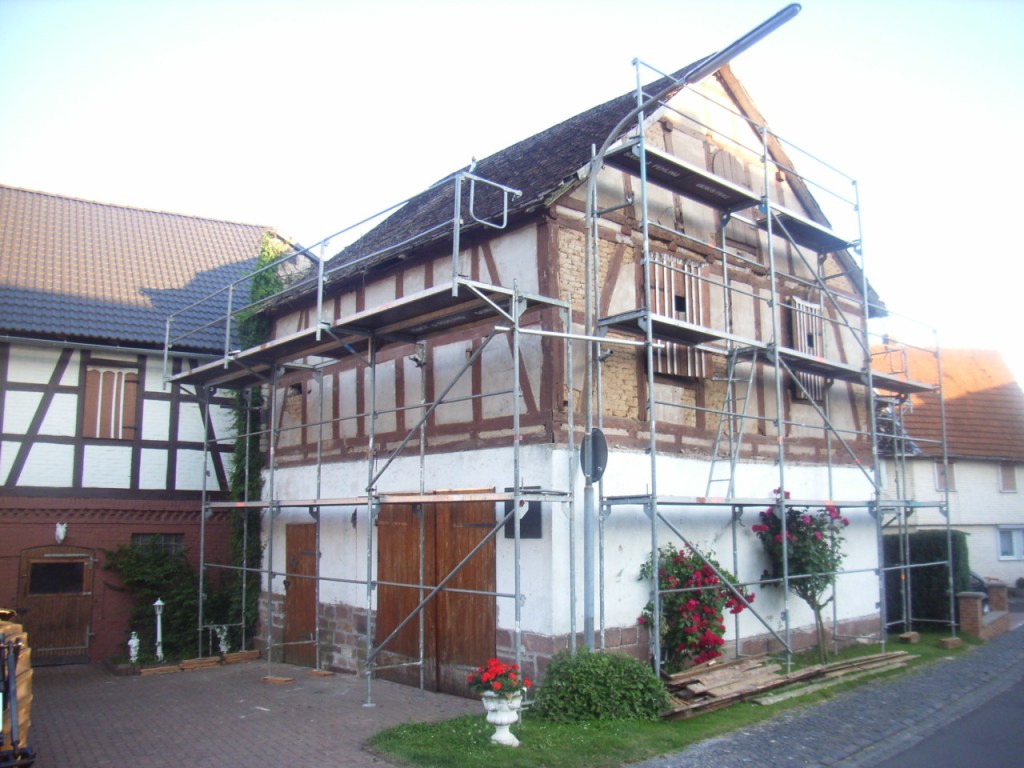
Regarding the history of the synagogue, Alemannia Judaica writes: “The damaged synagogue building was sold [after the ‘Night of Broken Glass’] to a farmer, who made extensive changes to the building’s exterior and subsequently used it as a barn. Later, the building served as a storage space.”12
“Of the original structure, only the upper floor with stencil paintings on the interior remained.” By the early 2000s, the roof was also leaking.13
The fire insurance registry shows that the former synagogue was sold to Leo and Maria Lecher-Rhein, relatives of the current owner, Marc Lecher. Written in red it says: “now insured together with No. 58.” Under number 58, the name “Lecher, Leo, and his wife Maria, née Rhein” is listed.14
For years, Marc Lecher, the building’s owner, had been waiting for a grant from the village renewal program to preserve what remained of the former Momberg synagogue. In 2008, he took matters into his own hands. Together with friends, he repaired the gables and the roof. They also removed the corrugated fiber cement from the exterior walls. “Behind it lay intact oak half-timbering, which was re-plastered on the courtyard side. In consultation with the historic preservation office, the gable and weather-facing sides were clad in wood, with the windows indicated by faux round transoms. After the roof was replaced, restorer Ulrike Höhfeld temporarily secured the endangered ceiling paintings. The historic preservation office covered the costs.”15

- [Anonymous], Momberg (City of Neustadt/Hessen, Marburg-Biedenkopf District) Jewish History / Synagogue http://www.alemannia-judaica.de/momberg_synagoge.htm#Zur History of the Synagogue [July 24, 2017]. ↩︎
- Ibid. ↩︎
- Ibid. ↩︎
- Alfred Schneider, Jewish Families in the Former Kirchhain District: Contributions to the History and Genealogy of Jewish Families in the Eastern Part of Today’s Marburg-Biedenkopf District in Hesse, published by the Amöneburg Museum 2006, p. 308. ↩︎
- [Anonymous], Momberg (City of Neustadt/Hesse, Marburg-Biedenkopf District) Jewish History / Synagogue http://www.alemannia-judaica.de/momberg_synagoge.htm#Zur History of the Synagogue [July 24, 2017]. ↩︎
- Pelin Aytac, “I Heard the Boots of the SS,” November 8, 2008, on the SP-Neustadt website, http://spd-neustadt.de/ich-hoerte-die-stiefel-der-ss-mnz/ [August 5, 2021]. ↩︎
- Gisela Spier-Cohen, Memories of Childhood and Concentration Camps, Kristallnacht in the Fall of 1938, Marburg 1994, p. 14. ↩︎
- Simeon Spier to Richard J. Bloomfield (email), July 9, 2026, 6:22 p.m. ↩︎
- Willy Schmitt, Momberg, a Chronicle, published by the City Council of Neustadt in 1985, p. 174. ↩︎
- Emanuel Emil Rosenberg, his wife Katinka Rosenberg-Blumenfeld, and their children Walter, Günther, and Heinz. Barbara Händler-Lachmann / Ulrich Schütt, *Unknown: Moved or Disappeared*, Marburg 1992, p. 132 ff. ↩︎
- Alan Blumenfeld to Richard J. Bloomfield (email), May 10, 2026, 12:37 p.m. ↩︎
- [Anonymous], Momberg (City of Neustadt/Hesse, Marburg-Biedenkopf District) Jewish History / Synagogue http://www.alemannia-judaica.de/momberg_synagoge.htm#Zur History of the Synagogue [July 24, 2017]. ↩︎
- Horst Jon. Bosshammer, “A Memorial Becomes a Private Matter,” November 7, 2008, on the SP-Neustadt website, https://spd-neustadt.de/ein-mahnmal-wird-zur-privatsache-mnz/ [July 5, 2021]. ↩︎
- Kirchhain, 1883–1954, Hessian Fire Insurance Institution in Kassel, Duplicate Fire Insurance Register, https://digitalisate-he.arcinsys.de/hstam/224/466/hstam_224_nr_466_0236.jpg. ↩︎
- Horst Jon. Bosshammer, “A Memorial Becomes a Private Matter,” November 7, 2008, on the SP-Neustadt website, https://spd-neustadt.de/ein-mahnmal-wird-zur-privatsache-mnz/ [July 5, 2021]. ↩︎


