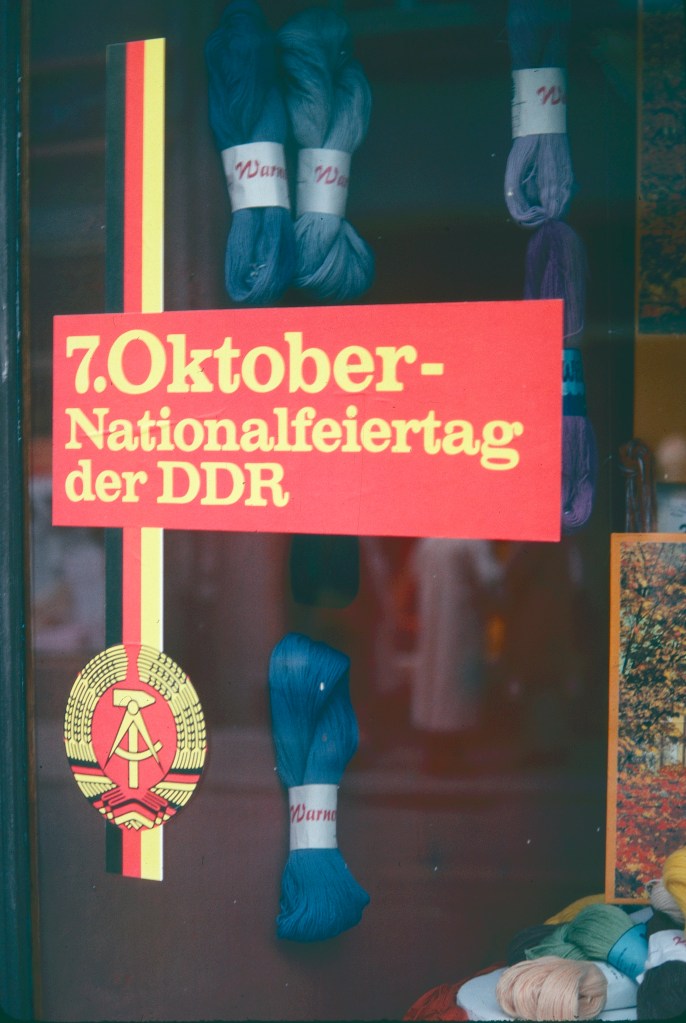
October 7th 1989, 40th Anniversary of the Founding of the German Democratic Republic. You are there! Yes, I was there on that memorable day at the Evangelical Educational Center in Schönburg, Thüringen, East Germany, together my wife Irma. We would soon be joined by son Thomas. However, the world had a reason to take little note of nor long remember our presence there. A more important guest was in the GDR on that occasion: Michail Gorbatschow.
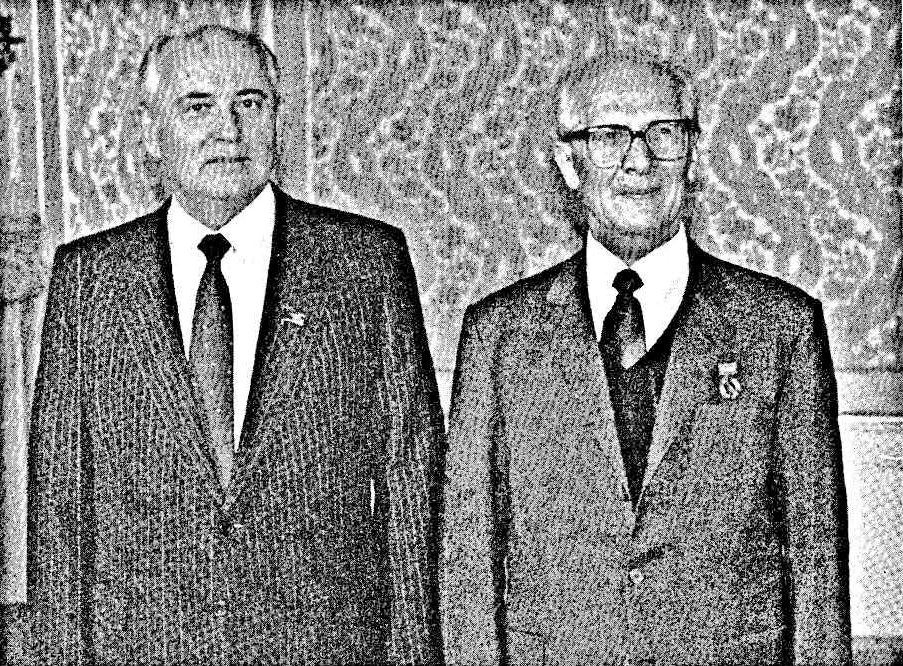
Gorbatschow was the guest of honor in Berlin at the official celebration of East Germany’s 40th anniversary. In the Palace of the Republic in Berlin he and Erich Honecker, General Secretary of the Central Committee of the German Socialist Unity Party and Chairman of the State Council of the GDR, made typical socialist-type speeches and toasted the success of the “extremely successful,” anti-fascist East German state. They appeared to take no notice of the thousands of people outside the People’s House — as the Palace of the Republic was also known — who were demonstrating for more democracy, freedom of travel, and for a change in government leadership. The demonstrators saw in the Soviet reformer Gorbatschow someone who would support their desire for change. “Gorbi! Gorbi!” they chanted. But the official state acts and the massive demonstrations all around East Germany were taking place in two separate worlds. At least for the time being.
Change was in the air. Tension was in the air. People had been arrested during the ongoing demonstrations in East Germany. However, no shots had been fired on the streets. People were fleeing to the West by way of “friendly, socialist countries.” The future was uncertain and many were afraid that the lenient attitude of the Volkspolizei (People’s Police) could change. Some said that the Stasi (State Security) had lists with the names of people to be arrested and to which prisons they were to be brought.
Traveling to Schönburg, we were not simply traveling to a foreign county, not just crossing the Iron Curtain between East and West. We were traveling to another world at that point in time. I never felt as foreign in a place as on the 7th of October 1989 in the Evangelical Educational Center in Schönburg. I delivered a talk on Dietrich Bonhoeffer’s Life Together to a conference of the Bonhoeffer Circle of Friends from my perspective as an American living and working in Switzerland. The attendees listened politely. However, they had another perspective. Their hearts and minds were with the demonstrators. They were more interested in what was happening on the streets of Berlin and other East German cities. They were interested in hearing if Gorbi would, indeed, help them in their quest for change.
The people at the conference were listening to reports in West-Radio of what was going on in Berlin. “They’re chanting ‘Gorbi, help us!'” some excitedly reported. Another person said they had just been on the phone with a family member who was following the demonstrations. “You wouldn’t believe what’s going on here!” the person exclaimed. And then the line went dead. The Stasi (State Security) was watching and listening and (unsuccessfully) trying to keep the news of the demonstrations from spreading. I felt threatened.
 Blumenfeld Family Stories
I couldn’t help but think of what’s been going on in Syria as I read this. How are those people feeling? Will the insurgents be better than Assad? I sure hope so.
LikeLike