Aunt Frances was at least in a geographical sense a “distant relative.” As long as I can remember Frances lived in or around St. Louis, Missouri, moving in later years to Mission Viejo, California. However, as long as Grandma lived, regular telephone conversations kept Frances closely informed of family life in Minnesota.
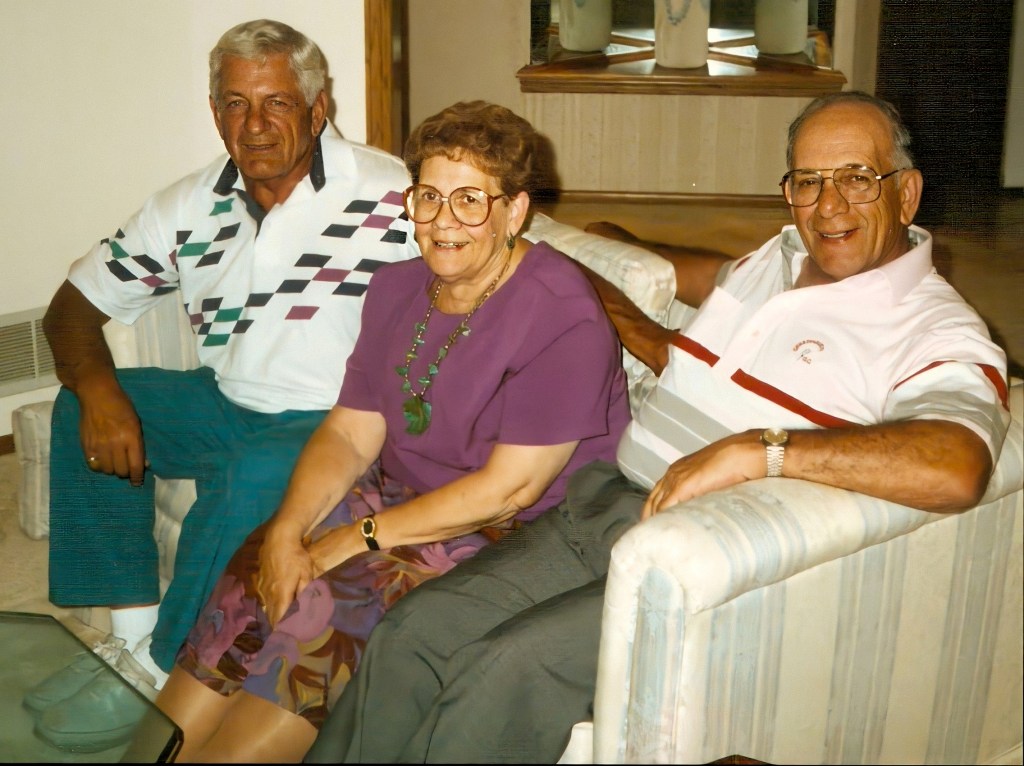
“Frances called,” Grandma would say and then tell us what Frances thought we should do. Grandma quoted her like an authority on life in general and on our lives in particular. Frances was Grandma’s ally in family matters. The words “Frances called” set Mother and Dad on edge. They both felt that Frances was too far away to really know what was going on in the Minnesota family circle. For them it was unwanted interference from a safe distance. Frances took after her mother and enjoyed – insisted upon? – her role as assistant “mover of the troops.”
As a child I enjoyed it when Frances and her family came to visit during vacation. It meant a family picnic and two other cousins to play with. It also meant the yearly game of “Frances and Philip are here.” Grandma would call Dad to tell him that his sister had arrived and ask when we were coming. Dad almost always responded by saying, “They have a car and know where we live. They can come and visit us.” Grandma meant that would be asking too much of those who had driven so far from St. Louis to St. Paul. Dad felt like a subject being summoned to pay his respects to visiting royalty. Given the dynamics of our family, Dad always lost the game of “Frances and Philip are here.”
Frances also came to visit when there was some kind of crisis. She came when Grandma was in the hospital. Grandma thought it was great that Frances had so much time to visit her. But when Grandma came home and needed to be taken care of, Frances left. When Grandpa was on his deathbed, Frances came, began clearing out the house and making all kinds of arrangements and decisions. But before the funeral could take place, Frances got on a plane and went home. I think Frances even actually once said, what some family members thought: “I think I’ll get on my broom and leave.”
One of my earliest recollections is of a train trip to Webster Groves to visit Frances and Philip. I remember two things about the train. There was a big panorama window in the last car where you could look out on the tracks and scenery behind the train. And then there were the connections between the cars that I was afraid to walk over. The train swayed, the metal plates over the couplings moved back and forth and it was very loud. I think Mother had to carry me from car to car.
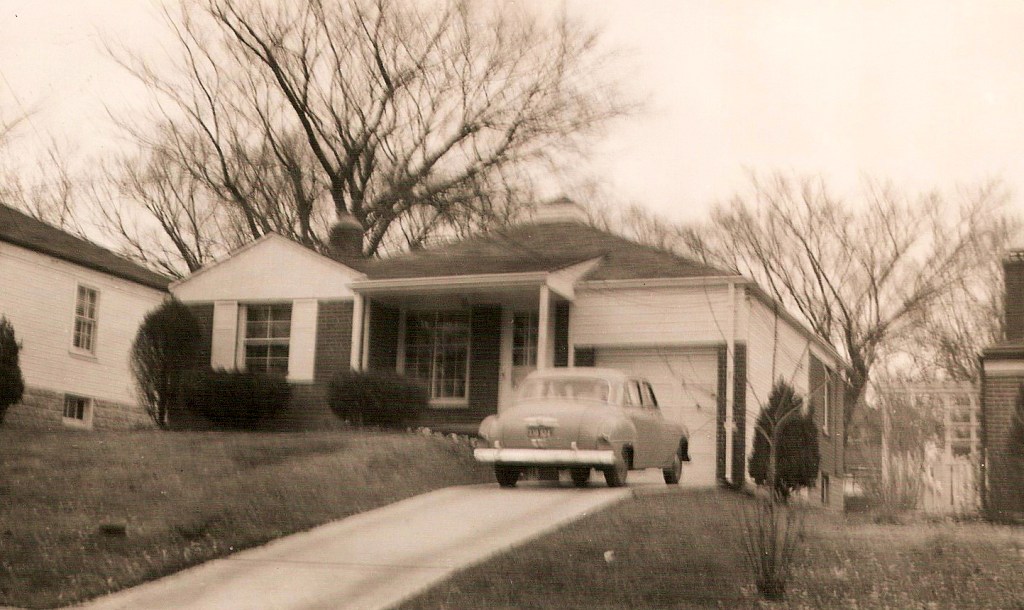
Mother and Dad had gone to Frances and Philip’s to help them in the yard laying sod. Dad often told the story of it being hot, and humid and that it was hard work. He had gone to the store and gotten a case of beer which he put in the refrigerator. When he later opened the refrigerator to take a bottle of HIS beer out, Frances slammed the door shut and said, “It’s my refrigerator. You have to ask me.” Dad held this against her the rest of her life.
Uncle Philip was for me the opposite of Aunt Frances. He was quiet and didn’t meddle in our affairs. Well, he meddled at least once: Grandma put my four female cousins and me into the bathtub all at once. Philip objected that this was not proper. I don’t think any of us were old enough to be aware of this potentially compromising sexual situation. Grandma – whose two boys and one girl had slept in the same bed for a time – went on calmly with our bath.
Frances had majored in English at Macalester College. Philip had earned a Ph.D. in plant physiology from the Agricultural School of the University of Minnesota and was employed in research by Monsanto Chemical in St. Louis. Mother said that he had a well-paying job and remembered going with Frances to transfer money from one bank to another because they had more deposited than the bank would insure.
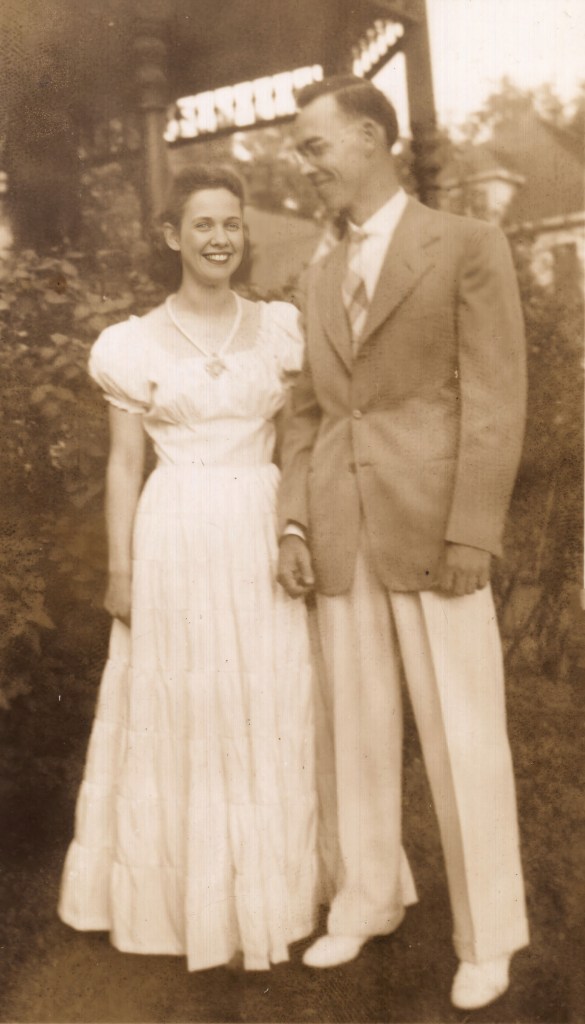
This information about Philip is found on the internet site of the University of Minnesota under “The Philip C. Hamm Memorial Lectureship in the Plant Sciences.” The lectureship “was established at the University of Minnesota in 1980 by a grant from the Monsanto Agricultural Products Co. in memory of the late Philip C. Hamm, an outstanding research scientist in the employ of the company. …
“Dr. Hamm, a native of St. Paul, …gained worldwide recognition as an innovative investigator in the plant sciences, receiving 63 patents for his discoveries….”
Philip was instrumental in the development of the herbicide “Roundup.” In the family, it is said that his research caused the cancer that was the cause of his death in 1979. The same family rumor tells of Frances receiving a sizable settlement from Monsanto after Philip’s death.
 Blumenfeld Family Stories