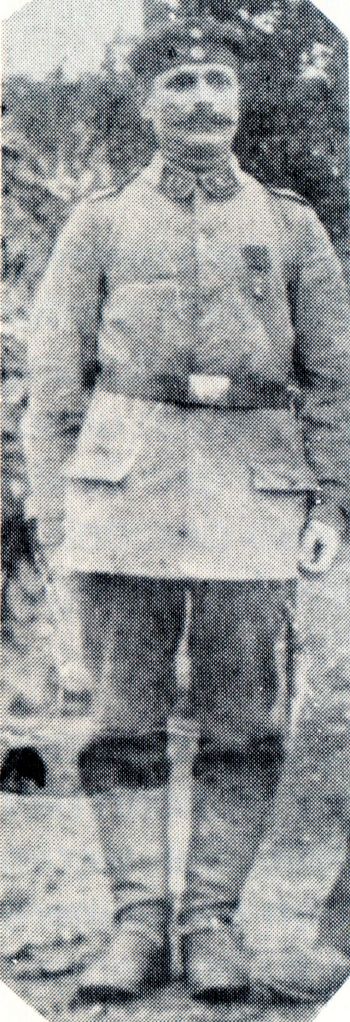
Abraham Blumenfeld (at left1), born April 16, 1874 in Momberg, Hesse, was the son of Isaac Blumenfeld and Bienchen Rothschild. Even before the Nazis came to power in 1933, Abraham Blumenfeld fell prey to the brown hoard. On September 4th and 11th, 1931, the weekly newspaper Jüdische Wochenzeitung für Kassel, Kurhessen und Waldeck ran the following articles about Abraham Blumenfeld’s death:2
“Momberg. The cattle dealer Abraham Blumenfeld has been reported missing since August 25th. He had gone on this date to a cattle market in Giessen and went on the same day with 1000 Marks in earnings to Frankfurt, where he intended to do further business. A search by police has turned up no sign of his whereabouts. Apparently, Blumenfeld has become the victim of a crime.”
“Momberg. As we reported, the cattle dealer A. Blumenfeld had been missing since attending the cattle market in Giessen on August 25th. Now police officials in Wiesbaden have informed Blumenfeld’s relatives that his body had been fished out of the Rhine near Schierstein. Whether his death was the result of an accident or criminal activity is under investigation by the police. His personal and financial situation seems to indicate that it was not suicide. We express our deepest condolences to the members of his family.”
The contemporary witness Gisela Spier Cohen writes about Abraham’s fate and its consequences in a little book of remembrances about her childhood and her experiences in concentration camps published in 1994.3
The story about Abraham begins in Gisela Spier Cohen’s childhood. “My bed stood in front of a small window overlooking the garden near our house. An old Jewish house stood at the other end of the garden. It was set back a bit, and so I had a view of the garden and the house when I looked out the window. This house was the so-called ‘Eisige Haus’ (Eisig = Isaak) [Gisela Spier Cohen is referring to my great-great-grandfather]. Aunt Sophie’s husband, Eisig’s Avrom (= Abraham), it was said, had committed suicide. The story was that he most likely had taken his life by throwing himself into the Rhine River. Therefore, his soul could not find rest; it transformed itself into a ghost which sometimes appeared walking in the yard or floating over it. This story was not meant for my ears, but, as a child, I had heard the story being whispered [by the adults]. When I looked out the window of my bedroom at night, I thought I saw Avrom’s ghost. When a bat or something flew past my window, I saw Avrom’s ghost. I lay, then, trembling with fear in my bed.”
The author survived the Holocaust and emigrated to Canada. During a visit to Momberg long after the Second World War she learned the truth about Eisig’s Avrom: There “I was told the following: A Nazi from a village near Momberg, where Avrom Eisig was a cattle merchant, owed Eisig[’s Avrom] money for a cow. However, this Nazi had no intention of paying the sum. [One day,] two Nazis followed Avrom Eisig from the market to the river, threw him in and drowned him. The police covered the Nazis. The story they told Avrom Eisig’s (Bloomfield’s) family [contrary to what was reported in the newspaper article above] was that he had committed suicide by jumping into the Rhine River. The whole village – Jews and Christians alike – swallowed the story; we were simple and naïve villagers, incapable of imagining the possibility of such lies and evil deeds.”
“I am no longer in contact with the Bloomfield family, and so I don’t know if they ever found out that their father didn’t commit suicide, … but rather was drowned by a few Nazi murderers from the next village.” A history book published in 1971 still describes Abraham’s death as a suicide!4
The family did indeed know that Abraham had been murdered. Some time before Abraham’s wife Sophie and thier son Julius emigrated to the US in 1936, they learned the real reason for Abraham’s death from a Christian resident of Momberg. But they “suppressed” the knowledge and decided not to tell anyone about the murder. Julius even knew the identity of the murderer! It was not until 60 years after the crime that Julius informed his family of the truth about the death. Julius and his mother had told the family that Abraham had died in a train accident.5
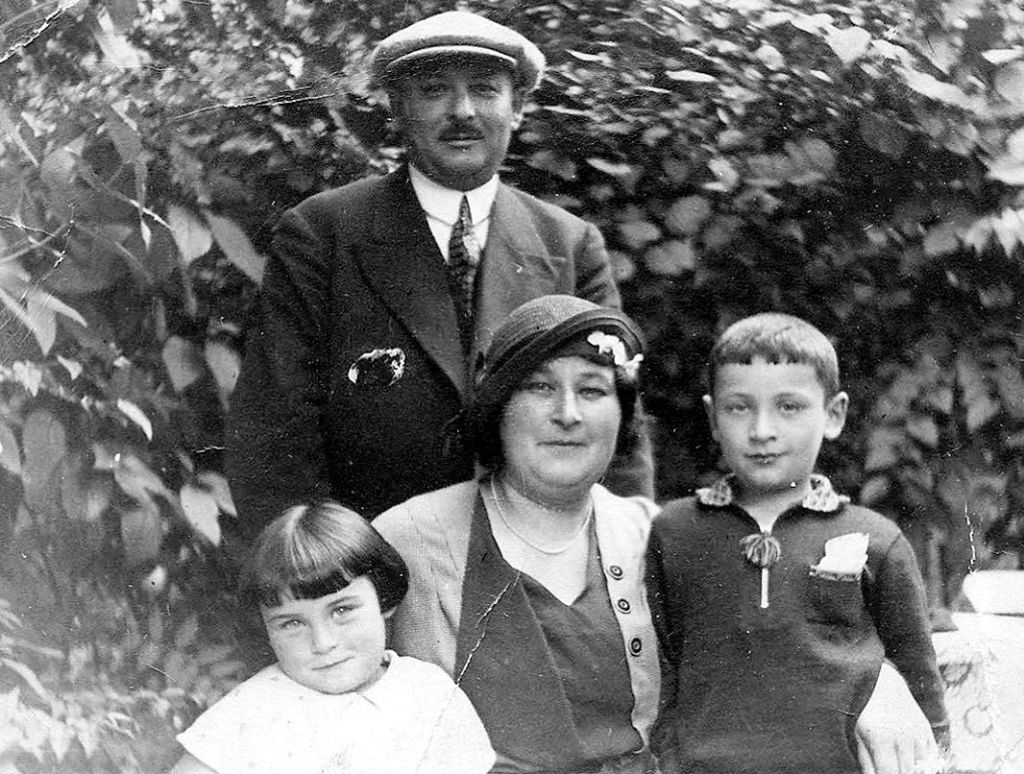
Gisela Spier Cohen doesn’t mention in her little book that it was her father Siegfried Spier (photo above6) who went to Schierstein, where they had pulled Abrahams body out of the Rhine by the mouth of the harbor. It was father Spier who organized a burial in a Jewish cemetery.7 “Traditionally, life is considered so holy in Judaism that only God can end it. Usually, no prayers for the dead are offered and no normal Jewish burial provided for Jews who have committed suicide, and they are buried along the edge of the cemetery.”8

- Willy Schmitt, Momberg – Eine Chronik von Willy Schmitt, Neustadt, 1985, S. 168. ↩︎
- Momberg (Stadt Neustadt/Hessen, Kreis Marburg-Biedenkopf). Jüdische Geschichte / Synagoge, in: Alemannia Judaica. Arbeitsgemeinschaft für die Erforschung der Geschichte der Juden im süddeutschen und angrenzenden Raum, http://www.alemannia-judaica.de/momberg_synagoge.htm [02-07-2017]. ↩︎
- Spier Cohen, Gisela, Aus den Erinnerungen an Kindheit und Konzentrationslager, Marburg, 1994. ↩︎
- Paul Arnsberg, Die jüdischen Gemeinden in Hessen. Anfang. Untergang. Neubeginn, 2. Bde., Frankfurt 1971, here Bd. 2, S. 126. ↩︎
- Simone Salomon-Bloomfield, Abraham’s granddaughter, to Richard J. Bloomfield (email), 14 August 2017, 4:48 a.m.. ↩︎
- Familie Spier aus Momberg in Bad Wildungen, Gisela Spier-Cohen, Foto, Bad Wildungen, 1934, in: Vor dem Holocaust – Fotos zum jüdischen Alltagsleben in Hessen, http://www.vor-dem-holocaust.de/bitmap/abb_momberg5_k.jpg [04-07-2018]. ↩︎
- Steven Bloomfield to Richard J. Bloomfield (email), 30 Juli 2017. ↩︎
- GbR Religionen-entdecken, Selbsttötung im Judentum – ist nur in drei Fällen akzeptiert, in: http://www.religionen-entdecken.de/lexikon/s/selbsttoetung-im-judentum [04-07-2018]. ↩︎
 Blumenfeld Family Stories
