The following text is an adaptation of a text that I wrote in August 1991 for Macalester Today, the alumni jounal of Macalester College, St. Paul, Minnesota.
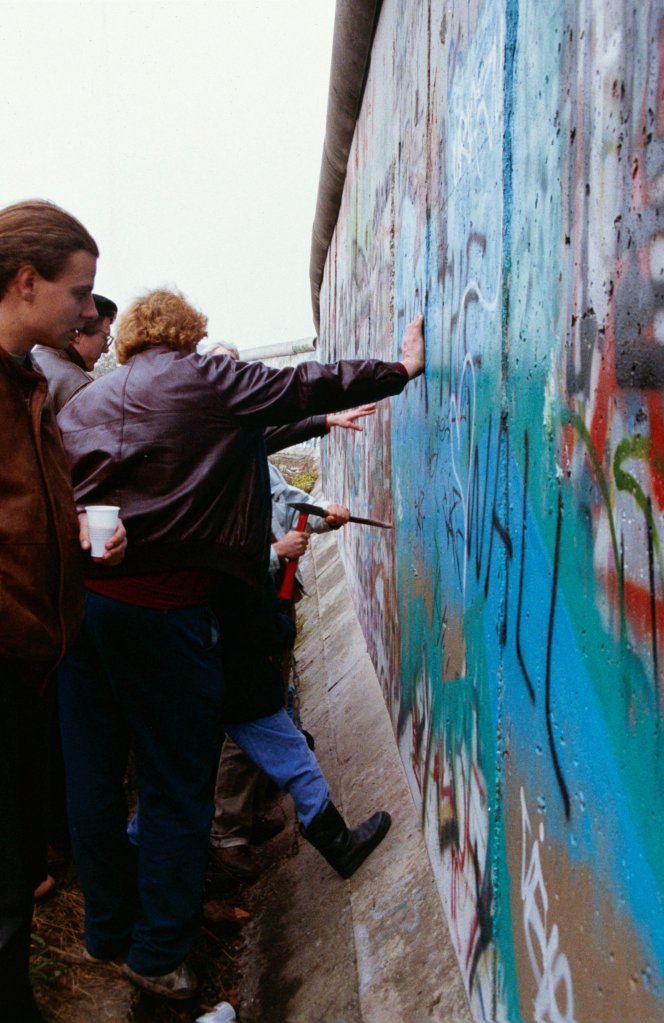
Photos of people chipping away the Berlin wall and colorful, spray-painted messages awaken a certain sadness within me. In the midst of the parties on the Kurfürstendamm, the buying of lang-hoped for items and the simple exuberance brought about by the freedom of movement, there were other scenes which have pased from the memories of most people.
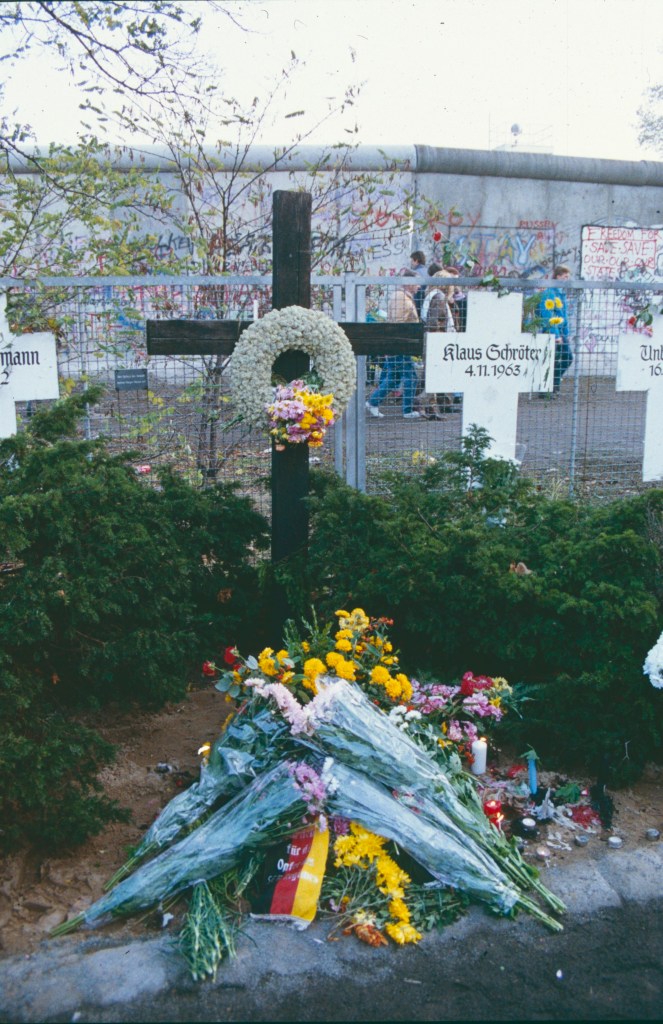
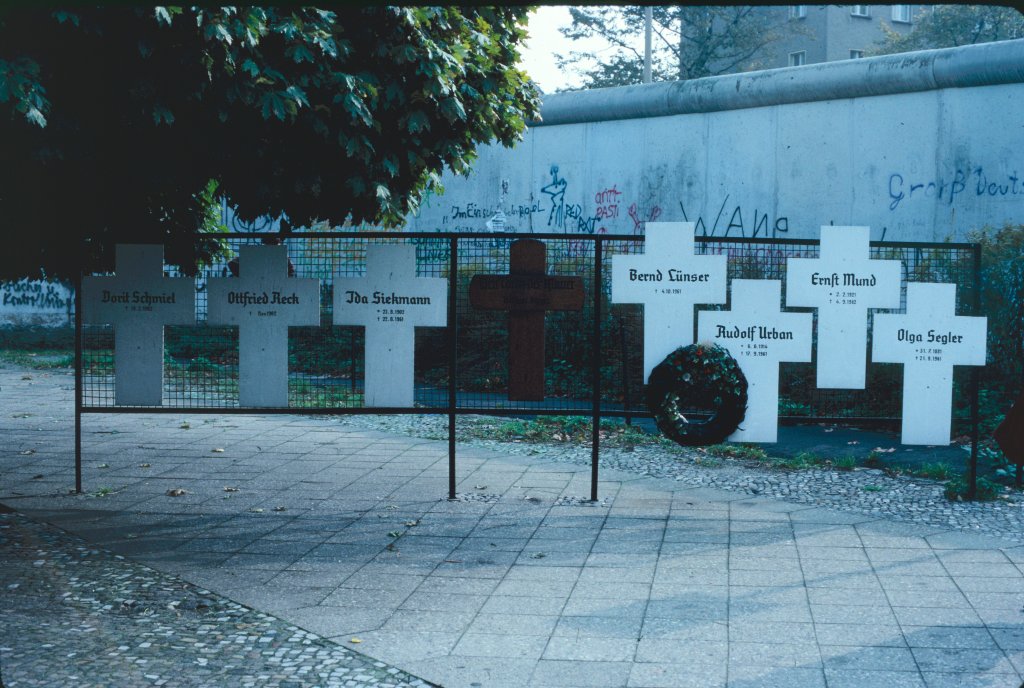
Many of the flowers that were handed out to East Germans crossing the border for the first time were placed at the foot of crosses erected in memory of those who had lost their lives trying to flee East Germany. Others had brought candles with them from the East to light in the West in memory of those who had died crossing a border that was now open. Many others just walked and walked along the Western side of the wall, taking in a vew that few thought they would ever be able to enjoy.
The wall will always remind me of something a friend of mine from Erfurt told me before anyone thought that our generation would ever see the opening of the painfully closed German-German border. When I asked how she felt about travel restrictions, she told me that she didn’t spend too much time thinking about them. “If you tink about it too much, you go crazy,” she told me, and changed the subject quickly.
Pictures of people chipping away at the physical wall look good and help sell newspapers and TV advertisements. The pictures are, however, superficial. They make it too easy to forget the people from young to old who chipped away at the wall for more than a whole generation. Their tools weren’t a hammer and a chisel, and often the results of their labors were not as tangible as a piece of cement that you can hold in your hand. I’m thinking about those people in East Germany who dared to think differently and sometimes suffered the consequences on the job, at school or in the community. I’m thinking about those who didn’t let the idea of freedom be walled in and who organized and spoke out. I’m thinking about all those people whose support through letters, visits, packages and prayers could not be captured on film.
I did not take a piece of the wall back to Switzerland with me. The wall symbolzed (and symbolizes) for me all of the restrictions under which the East Germans had suffered for 40 years . I felt that taking a part of it as a souvenir would somehow trivialize its meaning. A piece of the wall appeared to me then — and even now — as a relic of something unholy and evil. The right place for such relics is in a memorial or a museum.
 Blumenfeld Family Stories
For some reason, reading this reminded me of a book I read years back called The House by the Lake by Thomas Harding. In a way it tells the history of Germany from about 1890 to modern times through the history of one house in what was at one time East Germany. You might enjoy it.
LikeLike